Pharmacology of Trichosanthes Species: Therapeutic Potential of an Ancient Medicinal Plant
The exploration of medicinal plants has long been a cornerstone of pharmacological discovery. Throughout human history, botanical resources have provided the foundation for numerous therapeutic agents that continue to influence modern medicine. Even today, a significant proportion of pharmaceutical drugs either originate directly from plant sources or are derived from natural compounds discovered through ethnopharmacological research.
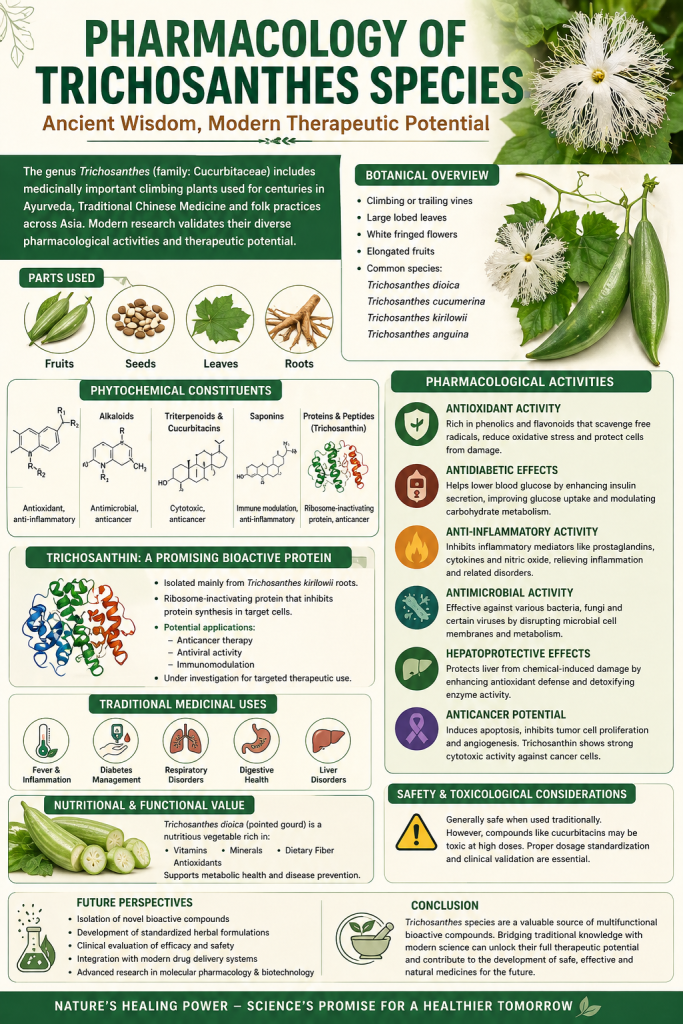
Among the many medicinal plants studied in traditional systems of medicine, the genus Trichosanthes, belonging to the family Cucurbitaceae, occupies an important position. Species within this genus have been used for centuries in traditional medical systems such as Ayurveda, Traditional Chinese Medicine (TCM), and various indigenous medicinal practices across Asia. These plants are known not only for their nutritional value but also for their diverse pharmacological properties.
The genus Trichosanthes includes several species such as Trichosanthes dioica, Trichosanthes cucumerina, Trichosanthes kirilowii, and Trichosanthes anguina. These plants are commonly distributed in tropical and subtropical regions and have traditionally been used for the treatment of conditions ranging from metabolic disorders and inflammatory diseases to respiratory ailments and infections.
Modern pharmacological research has begun to validate many of the therapeutic claims associated with Trichosanthes species. Investigations have revealed the presence of a wide range of bioactive compounds, including alkaloids, flavonoids, saponins, triterpenoids, glycosides, and proteins with potent biological activities. These compounds contribute to the plant’s antioxidant, anti-inflammatory, antidiabetic, antimicrobial, hepatoprotective, and anticancer properties.
The growing global interest in plant-based medicines and natural therapeutics has renewed attention toward the pharmacological potential of Trichosanthes species. Understanding the chemical composition, pharmacodynamics, and therapeutic applications of these plants is essential for their integration into modern pharmacotherapy.
This article explores the pharmacology of Trichosanthes species, highlighting their phytochemistry, mechanisms of action, therapeutic potential, and future prospects in pharmaceutical research.
Botanical Overview of Trichosanthes
The genus Trichosanthes consists of approximately 90 species of climbing or trailing plants belonging to the Cucurbitaceae family. These plants are widely cultivated in Asia for both medicinal and nutritional purposes.
One of the most well-known species is Trichosanthes dioica, commonly referred to as pointed gourd, which is widely consumed as a vegetable in India and Bangladesh. Another species, Trichosanthes cucumerina, known as snake gourd, is also valued for its medicinal properties.
These plants are characterized by:
- Climbing vines
- Large lobed leaves
- White flowers with distinctive fringed petals
- Elongated fruits
Different parts of the plant—including fruits, seeds, leaves, and roots—are used in traditional medicine.
Phytochemical Constituents
The pharmacological activities of Trichosanthes species are primarily attributed to their diverse phytochemical composition.
Major bioactive compounds include:
Flavonoids
Flavonoids are well-known for their antioxidant and anti-inflammatory properties.
Alkaloids
Certain alkaloids found in Trichosanthes species exhibit antimicrobial and anticancer activity.
Triterpenoids and Cucurbitacins
Cucurbitacins are bitter compounds known for their cytotoxic and anticancer effects.
Saponins
Saponins contribute to immune modulation and anti-inflammatory responses.
Proteins and Peptides
One notable protein derived from Trichosanthes species is trichosanthin, a ribosome-inactivating protein that has attracted significant attention in biomedical research.
Phenolic Compounds
Phenolics provide strong antioxidant activity, protecting cells from oxidative stress.
Pharmacological Activities
Antioxidant Activity
Oxidative stress plays a major role in the pathogenesis of numerous diseases including cancer, diabetes, cardiovascular disorders, and neurodegenerative conditions.
Extracts from Trichosanthes species contain high levels of phenolic compounds and flavonoids that act as free radical scavengers.
These compounds help neutralize reactive oxygen species and reduce cellular damage.
Antidiabetic Effects
Several studies have demonstrated the antidiabetic potential of Trichosanthes dioica.
The plant may exert hypoglycemic effects through multiple mechanisms:
- Enhancing insulin secretion
- Improving glucose uptake in peripheral tissues
- Reducing intestinal glucose absorption
- Modulating carbohydrate metabolism
These properties make the plant a promising candidate for the development of natural antidiabetic therapies.
Anti-inflammatory Activity
Inflammation is a central component of many chronic diseases.
Compounds present in Trichosanthes species have been shown to inhibit inflammatory mediators such as:
- Prostaglandins
- Cytokines
- Nitric oxide
By suppressing inflammatory pathways, these plants may help alleviate conditions such as arthritis and inflammatory bowel disease.
Antimicrobial Activity
Extracts from various Trichosanthes species have demonstrated antimicrobial activity against several pathogenic microorganisms.
These include:
- Bacterial pathogens
- Fungal organisms
- Certain viral agents
The antimicrobial activity is believed to arise from phytochemicals capable of disrupting microbial cell membranes and metabolic processes.
Hepatoprotective Effects
The liver plays a crucial role in detoxification and metabolic regulation.
Experimental studies have shown that Trichosanthes extracts may protect liver tissues from chemical-induced damage.
These hepatoprotective effects are likely related to the plant’s antioxidant properties and its ability to enhance detoxifying enzyme activity.
Anticancer Potential
One of the most intriguing pharmacological properties of Trichosanthes species is their potential anticancer activity.
The protein trichosanthin has been studied extensively for its ability to inhibit protein synthesis in cancer cells.
Mechanisms associated with anticancer effects include:
- Induction of apoptosis
- Inhibition of tumor cell proliferation
- Suppression of angiogenesis
Although clinical applications remain under investigation, these findings suggest significant therapeutic potential.
Trichosanthin: A Bioactive Protein
Trichosanthin is a ribosome-inactivating protein isolated from the roots of Trichosanthes kirilowii.
It functions by inactivating ribosomes and thereby inhibiting protein synthesis in target cells.
This protein has attracted attention for several therapeutic applications, including:
- Anticancer therapy
- Antiviral activity
- Immunomodulation
Research into trichosanthin continues to explore its potential as a targeted therapeutic agent.
Traditional Medicinal Uses
In traditional medicine, Trichosanthes species have been used to treat numerous conditions.
Common traditional applications include:
- Treatment of fever and inflammation
- Management of diabetes
- Relief of respiratory disorders
- Digestive health support
- Liver disorders
Such traditional knowledge has provided valuable insights guiding modern pharmacological investigations.
Nutritional and Functional Food Potential
Beyond its medicinal properties, Trichosanthes dioica is widely consumed as a nutritious vegetable.
The fruit contains:
- Vitamins
- Minerals
- Dietary fiber
- Antioxidants
Regular consumption may contribute to improved metabolic health and disease prevention.
Safety and Toxicological Considerations
Although Trichosanthes species offer numerous health benefits, safety evaluation remains important.
Certain compounds such as cucurbitacins may exhibit toxicity at high concentrations.
Therefore, appropriate dosage standardization and clinical validation are necessary before widespread pharmaceutical application.
Future Perspectives in Pharmaceutical Research
The pharmacological potential of Trichosanthes species remains an active area of scientific research.
Future directions may include:
- Isolation of novel bioactive compounds
- Development of standardized herbal formulations
- Clinical evaluation of therapeutic efficacy
- Integration with modern drug delivery systems
Advances in phytochemistry, molecular pharmacology, and biotechnology may further unlock the therapeutic potential of these plants.
Conclusion
The genus Trichosanthes represents a valuable source of pharmacologically active compounds with diverse therapeutic applications. Traditional medicinal knowledge combined with modern scientific research has revealed a wide range of biological activities associated with these plants, including antioxidant, antidiabetic, anti-inflammatory, antimicrobial, hepatoprotective, and anticancer effects.
Among the bioactive constituents, compounds such as flavonoids, triterpenoids, and ribosome-inactivating proteins like trichosanthin hold particular promise for future pharmaceutical development. However, further research is required to fully understand their mechanisms of action, safety profiles, and clinical efficacy.
As interest in natural medicines continues to grow, Trichosanthes species may play an increasingly important role in the development of plant-based therapeutics. By bridging traditional medicine and modern pharmacological science, these plants exemplify the potential of natural products to contribute meaningfully to the advancement of global healthcare.