Advanced Oncotherapeutics: The Next Frontier in Cancer Treatment
Cancer remains one of the most formidable medical challenges
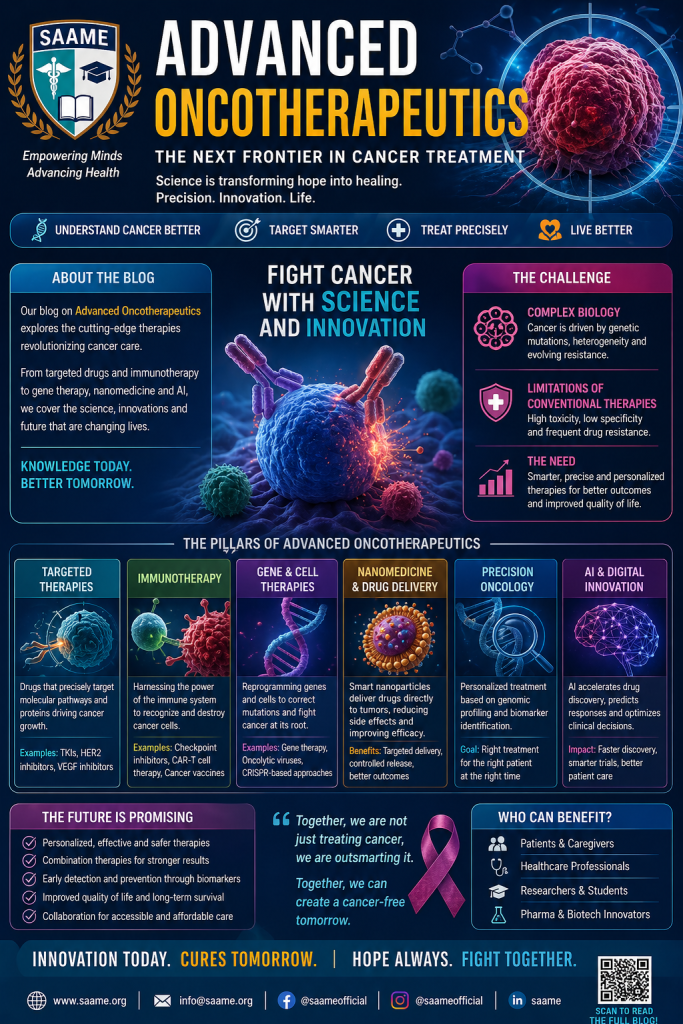
Cancer remains one of the most formidable medical challenges confronting modern healthcare systems. Despite decades of scientific research and therapeutic innovation, malignancies continue to impose a significant global burden in terms of morbidity, mortality, and healthcare costs. The biological complexity of cancer—characterized by genetic instability, cellular heterogeneity, immune evasion, and metastatic potential—has historically made effective treatment extremely difficult.
However, the landscape of oncology has undergone a remarkable transformation in recent decades. Advances in molecular biology, genomics, biotechnology, and pharmacology have fundamentally reshaped how cancer is understood and treated. Rather than viewing cancer as a single disease, modern oncology recognizes it as a heterogeneous group of disorders driven by distinct molecular abnormalities. This paradigm shift has paved the way for the development of advanced oncotherapeutics, a new generation of therapies designed to precisely target the biological mechanisms underlying tumor growth and progression.
Advanced oncotherapeutics encompass a diverse range of strategies, including targeted therapies, immunotherapies, gene-based treatments, cellular therapies, nanomedicine, and artificial intelligence–driven drug design. These approaches represent a departure from traditional cytotoxic chemotherapy and move toward more precise, personalized, and biologically informed treatment modalities.
This blog explores the evolving field of advanced oncotherapeutics, examining its scientific foundations, therapeutic innovations, and future implications for cancer treatment.
Background: Limitations of Conventional Cancer Therapy
Historically, cancer treatment relied primarily on three modalities:
- Surgery
- Radiation therapy
- Cytotoxic chemotherapy
While these approaches remain essential components of cancer care, they possess several inherent limitations.
Non-Specific Toxicity
Traditional chemotherapy targets rapidly dividing cells, a hallmark of cancer. However, many normal tissues—such as bone marrow, gastrointestinal epithelium, and hair follicles—also contain rapidly proliferating cells. Consequently, chemotherapy often produces severe side effects including:
- Myelosuppression
- Gastrointestinal toxicity
- Alopecia
- Immunosuppression
Drug Resistance
Cancer cells frequently develop resistance to chemotherapeutic drugs through mechanisms such as:
- Genetic mutations in drug targets
- Increased drug efflux through transporter proteins
- Activation of alternative signaling pathways
Tumor Heterogeneity
Tumors are composed of genetically diverse cell populations. This heterogeneity allows certain cancer cells to survive treatment and eventually cause disease recurrence.
These challenges have motivated the search for more precise therapeutic strategies capable of targeting cancer at the molecular level.
Targeted Cancer Therapies
Targeted therapies represent one of the most significant breakthroughs in modern oncology. Unlike traditional chemotherapy, which affects broad cellular processes, targeted therapies specifically interfere with molecular pathways essential for tumor survival.
Tyrosine Kinase Inhibitors
Many cancers are driven by abnormal activation of protein kinases that regulate cell signaling pathways controlling proliferation and survival.
Tyrosine kinase inhibitors (TKIs) block these enzymes and prevent uncontrolled cell growth.
Examples include:
- Drugs targeting epidermal growth factor receptor (EGFR) in lung cancer
- Inhibitors targeting BCR-ABL kinase in chronic myeloid leukemia
- Agents targeting vascular endothelial growth factor receptors (VEGFR) involved in tumor angiogenesis
These drugs have significantly improved outcomes for many cancer patients.
Monoclonal Antibody Therapies
Monoclonal antibodies are engineered proteins designed to recognize specific antigens on cancer cells.
They function through several mechanisms:
- Blocking growth factor receptors
- Delivering cytotoxic agents to tumor cells
- Activating immune responses against cancer
Examples include antibodies targeting HER2 receptors in breast cancer and CD20 proteins in lymphoma.
Cancer Immunotherapy
Perhaps the most revolutionary development in oncology has been the emergence of cancer immunotherapy, which harnesses the body’s immune system to fight tumors.
Immune Checkpoint Inhibitors
Tumors often evade immune detection by activating inhibitory pathways known as immune checkpoints.
Checkpoint inhibitors block these pathways and restore immune activity against cancer cells.
Key targets include:
- PD-1 / PD-L1 pathway
- CTLA-4 pathway
These therapies have demonstrated remarkable success in treating melanoma, lung cancer, kidney cancer, and several other malignancies.
CAR-T Cell Therapy
Chimeric Antigen Receptor T-cell therapy involves genetically modifying a patient’s own immune cells to recognize and destroy cancer cells.
The process involves:
- Extracting T cells from the patient
- Engineering them to express tumor-specific receptors
- Expanding them in the laboratory
- Infusing them back into the patient
CAR-T therapy has shown extraordinary results in certain blood cancers such as leukemia and lymphoma.
Gene Therapy in Oncology
Gene therapy represents another promising strategy in advanced oncotherapeutics.
Several approaches are under investigation:
Tumor Suppressor Gene Replacement
Restoring the function of tumor suppressor genes such as p53 may inhibit cancer growth.
Oncolytic Viruses
Engineered viruses can selectively infect and destroy cancer cells while sparing normal tissues.
These viruses also stimulate immune responses against tumors.
Nanomedicine in Cancer Treatment
Nanotechnology is increasingly being applied to oncology to improve drug delivery and therapeutic precision.
Nanoparticles can carry anticancer drugs directly to tumor tissues, reducing systemic toxicity.
Advantages include:
- Enhanced tumor targeting
- Improved drug stability
- Controlled drug release
Nanocarriers can also deliver multiple drugs simultaneously, enabling combination therapy.
Precision Oncology
Modern oncology increasingly relies on molecular profiling of tumors.
Technologies such as next-generation sequencing allow clinicians to identify genetic mutations responsible for cancer development.
These insights enable the selection of therapies specifically targeting those mutations.
For example:
- HER2 amplification in breast cancer
- ALK rearrangements in lung cancer
- BRAF mutations in melanoma
Precision oncology represents a major step toward personalized cancer treatment.
Artificial Intelligence in Cancer Therapy
Artificial intelligence is rapidly transforming cancer research and treatment.
AI systems can analyze massive datasets generated by genomic studies, imaging technologies, and clinical records.
Applications include:
- Identifying novel therapeutic targets
- Predicting drug responses
- Designing new anticancer molecules
- Optimizing clinical trial design
AI-driven drug discovery may significantly accelerate the development of next-generation cancer therapies.
Challenges in Advanced Oncotherapeutics
Despite remarkable progress, several challenges remain.
Treatment Cost
Advanced cancer therapies, particularly biologics and cellular therapies, can be extremely expensive.
Ensuring equitable access to these treatments remains a global challenge.
Therapeutic Resistance
Cancer cells continue to evolve and may develop resistance even to targeted therapies.
Combination therapies and adaptive treatment strategies are therefore being explored.
Safety Concerns
Some advanced therapies may produce unique toxicities, such as immune-related adverse events associated with immunotherapy.
Careful monitoring and management are essential.
Future Directions in Oncology
The future of cancer therapy is likely to involve integration of multiple therapeutic strategies.
Emerging innovations include:
- Personalized cancer vaccines
- CRISPR-based gene editing therapies
- Smart nanomedicine systems
- AI-guided therapeutic design
- Regenerative approaches for tissue repair
Such technologies may eventually transform cancer from a life-threatening disease into a manageable condition.
Implications for Global Health
As cancer incidence rises worldwide, the development of effective and accessible oncotherapeutics is becoming a global priority.
Countries with strong pharmaceutical industries—such as India—have an important role to play in expanding access to advanced cancer therapies.
Investments in biotechnology, genomic medicine, and clinical research will be essential for addressing the growing cancer burden.
Conclusion
Advanced oncotherapeutics represent one of the most exciting frontiers in modern medicine. By targeting the molecular and immunological foundations of cancer, these therapies offer new hope for patients facing diseases that were once considered untreatable.
The integration of targeted therapy, immunotherapy, gene therapy, nanomedicine, and artificial intelligence is transforming oncology into a highly precise and personalized discipline. While challenges such as cost, resistance, and safety remain, continued scientific innovation promises to further improve cancer outcomes in the coming decades.
Ultimately, the future of cancer therapy lies in a deeper understanding of tumor biology and the development of therapies capable of addressing disease at its most fundamental level. Advanced oncotherapeutics therefore represent not merely a technological advancement but a profound shift in the philosophy of cancer treatment—moving from generalized intervention toward precision medicine designed for each individual patient.