Pharmacology of Ficus Species: Therapeutic Potential of the Sacred and Medicinal Fig Trees
Medicinal plants have played a foundational role in the development of pharmacology and modern therapeutics. Across civilizations and cultures, plants have served not only as sources of nutrition but also as invaluable remedies for a wide range of diseases. Even in contemporary medicine, a considerable proportion of pharmaceuticals originate directly or indirectly from plant-derived compounds.
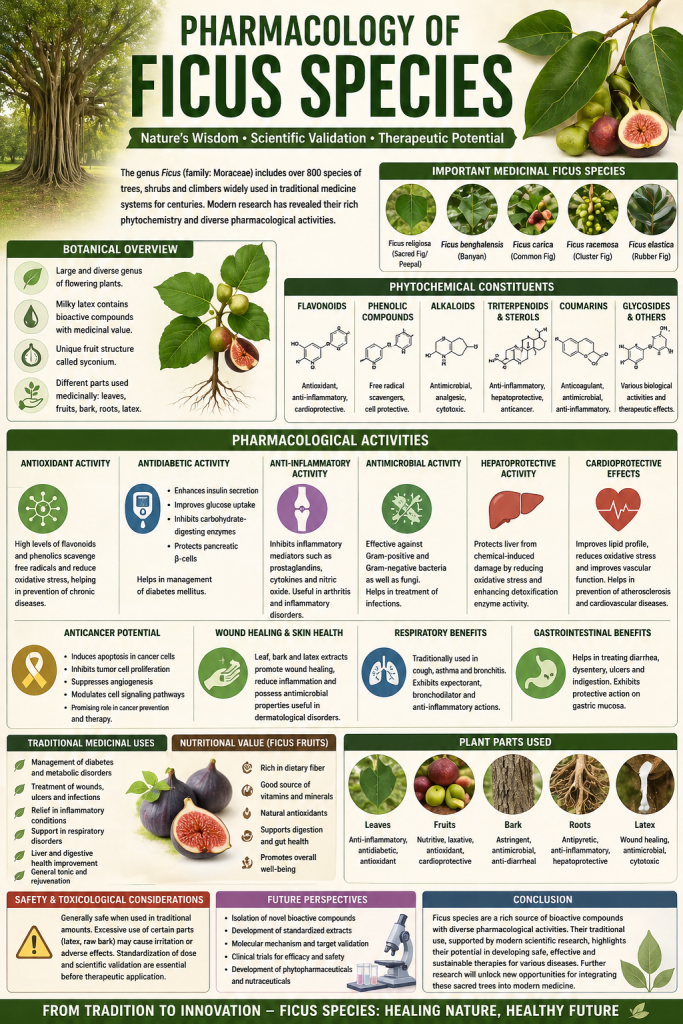
Among the many botanically significant medicinal genera, the genus Ficus, belonging to the family Moraceae, occupies a particularly prominent position. Comprising more than 800 species of trees, shrubs, and climbers, Ficus species are widely distributed across tropical and subtropical regions of the world. These plants hold immense ecological, cultural, and medicinal significance.
In traditional medicinal systems such as Ayurveda, Siddha, Unani medicine, and traditional Chinese medicine, various Ficus species have been used for centuries to treat numerous ailments including diabetes, gastrointestinal disorders, inflammatory diseases, respiratory conditions, skin infections, and metabolic disturbances.
Several well-known medicinal species within this genus include:
- Ficus religiosa (Sacred fig or Peepal tree)
- Ficus benghalensis (Banyan tree)
- Ficus carica (Common fig)
- Ficus racemosa (Cluster fig)
- Ficus elastica (Rubber fig)
Modern pharmacological research has begun to validate many of the traditional therapeutic claims associated with these plants. Investigations have revealed that Ficus species contain a wide array of bioactive phytochemicals, including flavonoids, alkaloids, phenolic compounds, sterols, triterpenoids, coumarins, and glycosides. These compounds contribute to diverse biological activities such as antioxidant, antidiabetic, anti-inflammatory, antimicrobial, hepatoprotective, cardioprotective, and anticancer effects.
With the growing global interest in natural medicines and plant-based pharmacotherapy, Ficus species have emerged as important candidates for the development of novel therapeutic agents. This article explores the pharmacology of Ficus species, focusing on their phytochemical composition, biological activities, therapeutic applications, and future potential in modern medicine.
Botanical Overview of Ficus
The genus Ficus is one of the largest genera of flowering plants, consisting of a diverse group of species ranging from towering trees to creeping vines. These plants are widely distributed in tropical and subtropical ecosystems across Asia, Africa, Australia, and the Americas.
A distinctive characteristic of Ficus species is the presence of milky latex, which contains various bioactive compounds with medicinal properties.
Another unique feature is the syconium, a specialized fruit structure that encloses numerous tiny flowers within a hollow receptacle.
Different parts of the plant are utilized in traditional medicine, including:
- Leaves
- Fruits
- Bark
- Roots
- Latex
Each of these plant components contains specific phytochemicals that contribute to their therapeutic properties.
Phytochemical Constituents of Ficus Species
The pharmacological activities of Ficus plants are largely attributed to their rich phytochemical composition.
Flavonoids
Flavonoids are polyphenolic compounds known for their antioxidant and anti-inflammatory properties. These compounds help neutralize free radicals and protect cells from oxidative damage.
Phenolic Compounds
Phenolic compounds exhibit strong antioxidant activity and contribute to the plant’s ability to protect against chronic diseases such as cardiovascular disorders and cancer.
Alkaloids
Alkaloids found in Ficus species possess antimicrobial and analgesic properties.
Triterpenoids and Sterols
Triterpenoids and phytosterols contribute to anti-inflammatory, hepatoprotective, and anticancer activities.
Coumarins
Coumarins have been reported to possess anticoagulant, antimicrobial, and anti-inflammatory effects.
Proteins and Enzymes
Certain Ficus species contain enzymes and bioactive proteins that contribute to their therapeutic activities.
Pharmacological Activities
Antioxidant Activity
Oxidative stress plays a central role in the development of many chronic diseases including diabetes, cardiovascular disorders, neurodegenerative diseases, and cancer.
Extracts from Ficus species contain high concentrations of flavonoids and phenolic compounds that act as powerful antioxidants.
These compounds scavenge free radicals and reduce oxidative damage in biological systems.
Antidiabetic Activity
Several Ficus species have demonstrated significant antidiabetic potential.
For example, extracts from Ficus religiosa and Ficus racemosa have been shown to reduce blood glucose levels in experimental studies.
Possible mechanisms include:
- Enhancement of insulin secretion
- Improvement of glucose uptake by tissues
- Inhibition of carbohydrate-digesting enzymes
- Protection of pancreatic beta cells
These findings support the traditional use of Ficus plants in managing diabetes.
Anti-inflammatory Effects
Inflammation is a key pathological process involved in numerous diseases such as arthritis, cardiovascular disorders, and autoimmune conditions.
Bioactive compounds in Ficus species have been shown to inhibit inflammatory mediators including:
- Prostaglandins
- Cytokines
- Nitric oxide
By modulating inflammatory pathways, Ficus extracts may help reduce tissue inflammation and associated symptoms.
Antimicrobial Activity
Extracts from Ficus plants exhibit antimicrobial activity against a variety of pathogens.
These include:
- Gram-positive bacteria
- Gram-negative bacteria
- Fungal organisms
The antimicrobial properties are attributed to phytochemicals capable of disrupting microbial cell membranes and interfering with metabolic processes.
Hepatoprotective Activity
The liver is particularly vulnerable to damage caused by toxins, drugs, and oxidative stress.
Studies have demonstrated that extracts from Ficus racemosa and Ficus religiosa can protect liver cells from chemical-induced injury.
These hepatoprotective effects are likely related to antioxidant activity and enhancement of detoxification pathways.
Cardioprotective Effects
Cardiovascular diseases remain one of the leading causes of mortality worldwide.
Certain compounds found in Ficus species may contribute to cardiovascular protection by:
- Reducing oxidative stress
- Improving lipid metabolism
- Enhancing vascular function
Such effects suggest potential benefits in preventing atherosclerosis and other cardiovascular disorders.
Anticancer Potential
One of the most exciting areas of research on Ficus species involves their potential anticancer properties.
Several phytochemicals present in these plants have demonstrated the ability to:
- Induce apoptosis in cancer cells
- Inhibit tumor cell proliferation
- Suppress angiogenesis
Although further clinical studies are required, these findings highlight the potential of Ficus-derived compounds in oncology research.
Traditional Medicinal Uses
Traditional medicinal systems have long recognized the therapeutic value of Ficus species.
Examples of traditional uses include:
- Treatment of digestive disorders
- Management of respiratory diseases
- Healing of wounds and skin infections
- Regulation of blood sugar levels
- Treatment of inflammatory conditions
Such ethnobotanical knowledge has guided many modern pharmacological investigations.
Nutritional Value of Ficus Fruits
The fruits of certain Ficus species, particularly Ficus carica (common fig), are widely consumed and offer significant nutritional benefits.
These fruits contain:
- Dietary fiber
- Vitamins
- Minerals
- Natural antioxidants
Regular consumption of figs may contribute to improved digestive health and metabolic balance.
Safety and Toxicological Considerations
Although Ficus species are generally considered safe when used traditionally, certain plant components may cause adverse reactions if consumed in excessive amounts.
The latex produced by some species may cause skin irritation in sensitive individuals.
Therefore, proper dosage standardization and toxicological evaluation are necessary for pharmaceutical development.
Future Perspectives in Pharmaceutical Research
The pharmacological potential of Ficus species continues to attract scientific interest.
Future research directions include:
- Isolation of novel bioactive compounds
- Development of standardized herbal formulations
- Molecular studies on mechanisms of action
- Clinical evaluation of therapeutic efficacy
- Integration with modern drug delivery systems
Advances in phytochemistry, molecular pharmacology, and biotechnology may further unlock the therapeutic potential of these plants.
Conclusion
The genus Ficus represents a rich and valuable source of medicinal compounds with diverse pharmacological activities. Traditional medicinal knowledge combined with modern scientific research has revealed that Ficus species possess antioxidant, antidiabetic, anti-inflammatory, antimicrobial, hepatoprotective, cardioprotective, and anticancer properties.
These therapeutic effects arise from a wide range of phytochemicals including flavonoids, phenolic compounds, triterpenoids, and alkaloids. As interest in natural medicines continues to expand, Ficus species offer promising opportunities for the development of plant-based pharmaceuticals and nutraceuticals.
Further research involving rigorous pharmacological studies and clinical trials will be essential to fully realize the therapeutic potential of these remarkable plants. By integrating traditional knowledge with modern biomedical science, Ficus species may contribute significantly to the advancement of natural product pharmacology and global healthcare in the years to come.