Pharmacology of Flavonoids: Natural Bioactive Molecules in Modern Therapeutics
Natural products have historically played a crucial role in the development of pharmacology and drug discovery. Many modern pharmaceuticals originate from compounds first identified in plants, highlighting the profound therapeutic potential of phytochemicals. Among the numerous plant-derived bioactive compounds, flavonoids represent one of the most extensively studied groups due to their remarkable biological activities and wide distribution in nature.
Flavonoids are a diverse class of polyphenolic secondary metabolites found in fruits, vegetables, grains, tea, wine, medicinal herbs, and numerous plant-derived foods. These compounds contribute to the pigmentation, flavor, and defense mechanisms of plants. In human health, flavonoids have attracted considerable attention for their ability to modulate multiple physiological and biochemical processes.
Over the past few decades, scientific research has revealed that flavonoids possess a wide range of pharmacological properties including antioxidant, anti-inflammatory, antidiabetic, cardioprotective, neuroprotective, antimicrobial, hepatoprotective, and anticancer activities. These properties have positioned flavonoids as promising candidates for the prevention and treatment of numerous chronic diseases.
In addition to their therapeutic potential, flavonoids are also considered important components of functional foods and nutraceuticals, contributing to disease prevention and overall health promotion. As the global interest in plant-based medicines and natural health products continues to grow, flavonoids are increasingly being explored for their role in modern pharmacotherapy.
This article provides a comprehensive overview of the pharmacology of flavonoids, including their chemical structure, classification, mechanisms of action, pharmacological activities, and potential applications in modern medicine.
Chemical Structure and Classification of Flavonoids
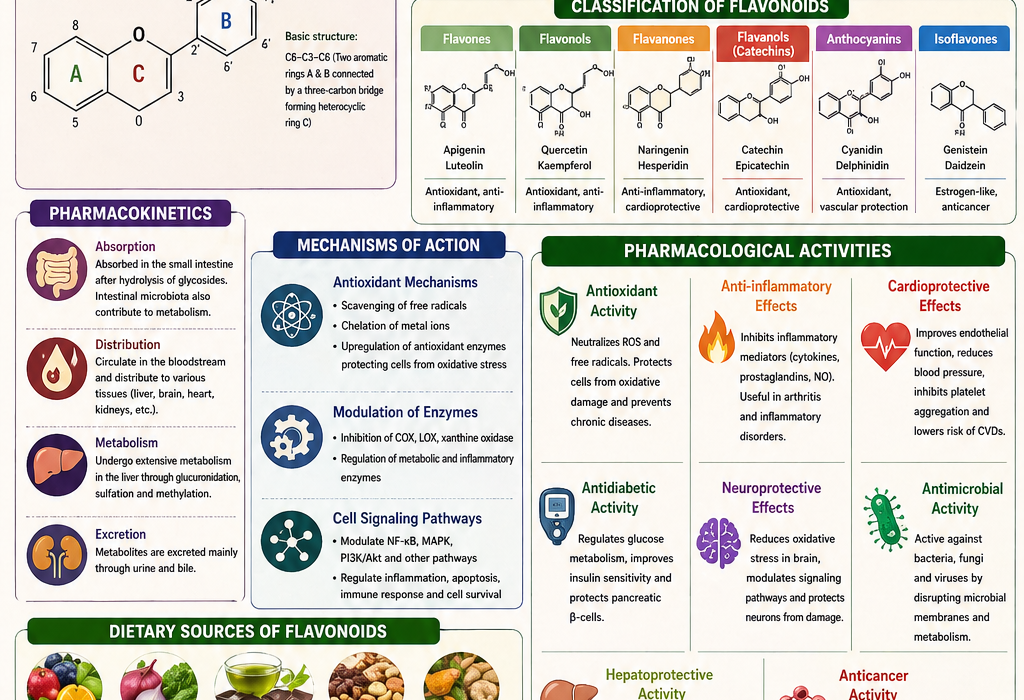
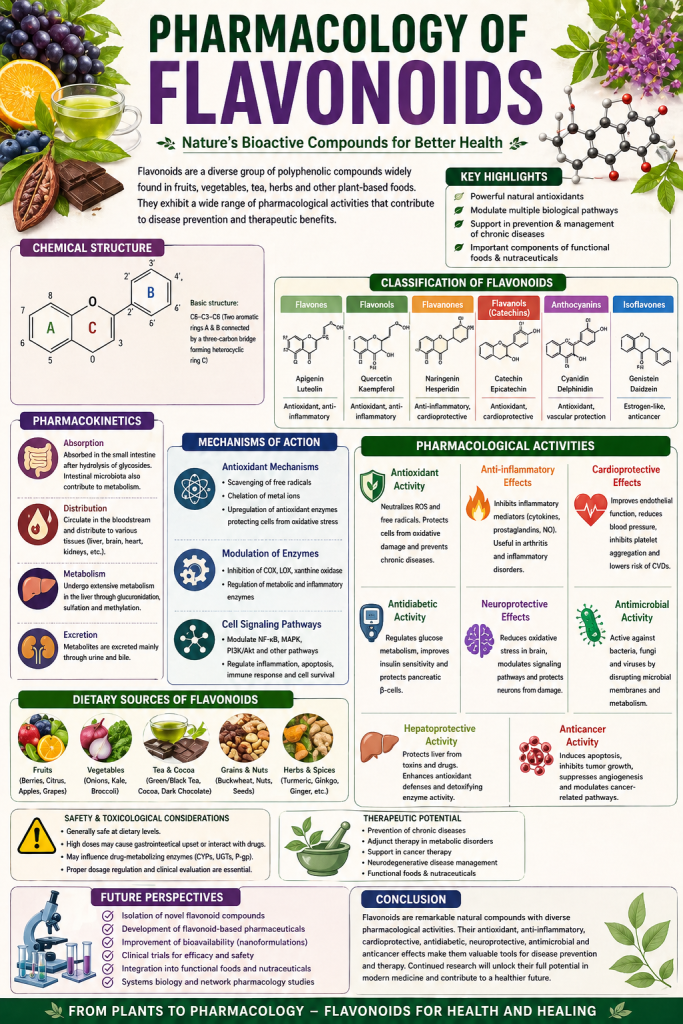
Flavonoids share a common chemical structure consisting of two aromatic rings (A and B) connected by a three-carbon bridge that forms a heterocyclic ring (C). This basic structure is often described as a C6–C3–C6 skeleton.
Variations in hydroxylation, methylation, glycosylation, and other modifications give rise to a large number of flavonoid compounds.
Flavonoids are generally classified into several major subclasses:
Flavones
Examples include apigenin and luteolin. These compounds exhibit strong antioxidant and anti-inflammatory activities.
Flavonols
Common flavonols include quercetin and kaempferol. These are among the most widely studied flavonoids due to their potent biological effects.
Flavanones
Flavanones such as naringenin and hesperidin are abundant in citrus fruits and possess anti-inflammatory and cardioprotective properties.
Flavanols (Catechins)
Catechins are present in tea, cocoa, and certain fruits and are well known for their antioxidant activity.
Anthocyanins
Anthocyanins are responsible for the red, purple, and blue colors of many fruits and vegetables.
Isoflavones
Isoflavones such as genistein are particularly abundant in soy products and have estrogen-like activity.
Pharmacokinetics of Flavonoids
The pharmacokinetic behavior of flavonoids plays an important role in determining their biological effects.
Absorption
Flavonoids are generally absorbed in the small intestine after enzymatic hydrolysis of glycoside forms into aglycones. Intestinal microbiota also contribute to the metabolism of flavonoids.
Distribution
After absorption, flavonoids circulate in the bloodstream and distribute to various tissues including the liver, brain, heart, and kidneys.
Metabolism
Flavonoids undergo extensive metabolism in the liver through processes such as:
- Glucuronidation
- Sulfation
- Methylation
These metabolic transformations influence their biological activity and bioavailability.
Excretion
Flavonoid metabolites are primarily excreted through urine and bile.
Mechanisms of Action
Flavonoids exert their pharmacological effects through multiple molecular mechanisms.
Antioxidant Mechanisms
One of the most important actions of flavonoids is their ability to neutralize reactive oxygen species (ROS) and free radicals.
They achieve this through:
- Direct scavenging of free radicals
- Chelation of metal ions
- Upregulation of antioxidant enzymes
These actions help protect cells from oxidative damage.
Modulation of Enzymatic Activity
Flavonoids can regulate the activity of several enzymes involved in metabolic and inflammatory pathways.
Examples include inhibition of:
- Cyclooxygenase (COX) enzymes
- Lipoxygenase (LOX) enzymes
- Xanthine oxidase
Such modulation contributes to their anti-inflammatory and antioxidant effects.
Cell Signaling Pathways
Flavonoids influence numerous intracellular signaling pathways, including:
- Nuclear factor kappa B (NF-κB)
- Mitogen-activated protein kinase (MAPK)
- Phosphoinositide 3-kinase (PI3K/Akt)
These pathways regulate inflammation, cell survival, apoptosis, and immune responses.
Pharmacological Activities of Flavonoids
Antioxidant Activity
Flavonoids are widely recognized as powerful natural antioxidants. They help reduce oxidative stress by scavenging free radicals and enhancing endogenous antioxidant defenses.
This activity is particularly important in preventing chronic diseases associated with oxidative damage.
Anti-inflammatory Effects
Flavonoids exhibit anti-inflammatory properties by inhibiting the production of inflammatory mediators such as cytokines, prostaglandins, and nitric oxide.
These effects make flavonoids beneficial in conditions such as arthritis, inflammatory bowel disease, and chronic inflammatory disorders.
Cardioprotective Effects
Flavonoids play a significant role in cardiovascular health.
Their cardioprotective effects include:
- Reduction of oxidative stress in vascular tissues
- Improvement of endothelial function
- Inhibition of platelet aggregation
- Reduction of blood pressure
Consumption of flavonoid-rich foods has been associated with reduced risk of cardiovascular diseases.
Antidiabetic Activity
Flavonoids may help regulate glucose metabolism and improve insulin sensitivity.
Potential mechanisms include:
- Inhibition of carbohydrate-digesting enzymes
- Enhancement of glucose uptake by cells
- Protection of pancreatic beta cells
These properties suggest potential applications in the management of diabetes mellitus.
Neuroprotective Effects
Flavonoids may provide protection against neurodegenerative diseases such as Alzheimer’s disease and Parkinson’s disease.
They exert neuroprotective effects through:
- Reduction of oxidative stress in neural tissues
- Modulation of neuronal signaling pathways
- Prevention of neuronal cell death
Antimicrobial Activity
Certain flavonoids demonstrate antimicrobial activity against bacteria, viruses, and fungi.
These compounds can disrupt microbial membranes, inhibit nucleic acid synthesis, and interfere with microbial metabolism.
Anticancer Activity
Flavonoids have been widely investigated for their anticancer potential.
Their anticancer mechanisms include:
- Induction of apoptosis in cancer cells
- Inhibition of tumor cell proliferation
- Suppression of angiogenesis
- Modulation of cancer-related signaling pathways
Although clinical applications remain under investigation, flavonoids represent promising candidates for cancer prevention and therapy.
Dietary Sources of Flavonoids
Flavonoids are widely present in many plant-based foods.
Major dietary sources include:
- Fruits such as berries, apples, and citrus fruits
- Vegetables such as onions and kale
- Tea and cocoa
- Red wine
- Soy products
- Medicinal herbs
A diet rich in these foods contributes significantly to flavonoid intake and associated health benefits.
Safety and Toxicological Considerations
Flavonoids are generally considered safe when consumed as part of a normal diet.
However, high doses of certain flavonoid supplements may produce adverse effects or interact with medications.
For example, flavonoids may influence the activity of drug-metabolizing enzymes, potentially affecting drug pharmacokinetics.
Therefore, appropriate dosage regulation and clinical evaluation are necessary.
Future Perspectives in Flavonoid Research
The pharmacological potential of flavonoids continues to attract considerable scientific interest.
Future research directions include:
- Isolation of novel flavonoid compounds
- Development of flavonoid-based pharmaceuticals
- Improvement of bioavailability through nanotechnology
- Clinical trials evaluating therapeutic efficacy
- Integration of flavonoids into functional foods and nutraceuticals
Advances in molecular pharmacology and biotechnology may further expand the therapeutic applications of these natural compounds.
Conclusion
Flavonoids represent a remarkable group of natural compounds with extensive pharmacological potential. Their antioxidant, anti-inflammatory, cardioprotective, antidiabetic, neuroprotective, antimicrobial, and anticancer properties make them valuable contributors to human health and disease prevention.
As research continues to uncover the molecular mechanisms underlying these biological activities, flavonoids are likely to play an increasingly important role in modern pharmacotherapy. By bridging the fields of nutrition, natural product chemistry, and pharmaceutical science, flavonoids exemplify the immense therapeutic potential of plant-derived bioactive compounds.
The continued exploration of flavonoids may ultimately lead to the development of novel therapeutic agents capable of addressing some of the most pressing health challenges of the modern world.