
Silent Siege on the Kidneys
Diabetic Nephropathy: Understanding the Renal Consequences of a Global Metabolic Epidemic
By Devanssh Mehta (M.Pharm., MBA, B.Pharm.)
Introduction: When Sugar Begins to Rewrite the Fate of the Kidneys
Diabetes mellitus has emerged as one of the most formidable chronic diseases of the twenty-first century. What was once considered a relatively uncommon metabolic disorder has now evolved into a global epidemic affecting hundreds of millions of individuals across continents. Yet, the most devastating consequences of diabetes are not limited to elevated blood glucose levels. The true burden of this disease lies in its long-term complications that progressively damage vital organs.
Among these complications, diabetic nephropathy stands as one of the most serious and life-altering manifestations. It is a condition in which prolonged hyperglycemia gradually damages the delicate filtration system of the kidneys, eventually leading to chronic kidney disease and, in severe cases, end-stage renal failure.
Diabetic nephropathy is often described as a silent disease, not because it lacks severity, but because it progresses quietly for years before obvious symptoms emerge. By the time clinical signs become evident, substantial renal damage may already have occurred.
Understanding diabetic nephropathy is therefore not merely a matter of medical curiosity—it is a critical necessity for global public health. The condition represents a convergence of metabolic dysregulation, vascular injury, inflammatory pathways, and genetic susceptibility, all interacting over years to compromise renal function.
This article explores diabetic nephropathy in depth—its biological origins, molecular mechanisms, clinical manifestations, diagnostic approaches, therapeutic strategies, and the future of research in combating this condition.
The Kidney: A Masterpiece of Biological Engineering
To understand diabetic nephropathy, it is essential to first appreciate the remarkable complexity of the kidneys.
Each human kidney contains approximately one million microscopic filtration units called nephrons. These nephrons function as the body’s natural purification system, continuously filtering blood to remove metabolic waste products, toxins, and excess fluids.
The key component of the nephron is the glomerulus, a delicate network of capillaries responsible for filtering blood plasma. The glomerular filtration barrier consists of three layers:
- Endothelial cells
- Basement membrane
- Podocytes
Together, these structures regulate the passage of water, electrolytes, and small molecules while preventing the loss of essential proteins.
Under normal physiological conditions, this filtration system functions with remarkable precision. However, persistent hyperglycemia in diabetes gradually disrupts these finely tuned structures, setting the stage for diabetic nephropathy.
The Global Burden of Diabetic Nephropathy
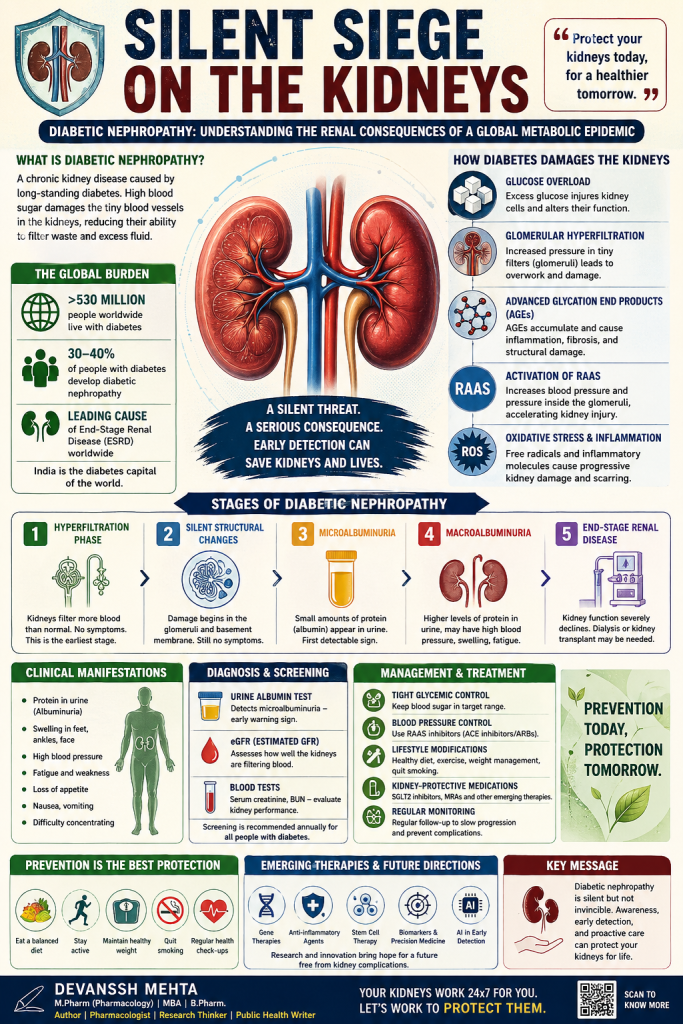
The prevalence of diabetes continues to rise dramatically worldwide. According to international epidemiological estimates, more than 530 million individuals currently live with diabetes, and projections suggest this number may exceed 700 million by 2045.
India, often described as the diabetes capital of the world, bears a particularly heavy burden of the disease. Rapid urbanization, sedentary lifestyles, dietary changes, and genetic predisposition have contributed to the escalating prevalence of type 2 diabetes in the Indian population.
Among individuals with diabetes:
- Approximately 30–40% eventually develop diabetic nephropathy.
- Diabetic nephropathy is the leading cause of end-stage renal disease (ESRD) globally.
- It accounts for a significant proportion of patients requiring dialysis or kidney transplantation.
The socio-economic impact of diabetic nephropathy is enormous. Chronic kidney disease imposes lifelong healthcare costs, reduces quality of life, and places substantial pressure on healthcare systems.
Pathophysiology: How Diabetes Damages the Kidneys
The development of diabetic nephropathy is not a sudden event but rather the result of years of cumulative metabolic and vascular stress.
Persistent hyperglycemia triggers a cascade of biochemical changes that ultimately damage the renal microvasculature.
1. Glomerular Hyperfiltration
In the early stages of diabetes, the kidneys experience increased filtration pressure due to metabolic alterations. This phenomenon, known as glomerular hyperfiltration, initially appears harmless but gradually leads to structural damage within the glomeruli.
2. Advanced Glycation End Products (AGEs)
High blood glucose levels promote the formation of advanced glycation end products, which accumulate in tissues and interfere with normal protein function.
AGEs contribute to:
- Thickening of the glomerular basement membrane
- Increased oxidative stress
- Activation of inflammatory pathways
These molecular changes progressively impair renal filtration.
3. Activation of the Renin-Angiotensin-Aldosterone System
The renin-angiotensin-aldosterone system (RAAS) plays a crucial role in regulating blood pressure and kidney function. In diabetes, excessive activation of this system leads to:
- Increased intraglomerular pressure
- Enhanced sodium retention
- Progressive renal fibrosis
4. Oxidative Stress and Inflammation
Chronic hyperglycemia generates excessive reactive oxygen species within renal tissues. These molecules damage cellular components, including DNA, proteins, and lipids.
Simultaneously, inflammatory cytokines promote structural remodeling of the kidney, accelerating the progression of nephropathy.
Stages of Diabetic Nephropathy
Diabetic nephropathy typically develops through several well-defined stages.
Stage 1: Hyperfiltration Phase
During the earliest stage, the kidneys filter blood at an abnormally high rate. This phase may occur shortly after the onset of diabetes and often produces no symptoms.
Stage 2: Silent Structural Changes
Structural alterations begin to appear in the glomerular basement membrane and mesangial matrix. Although renal damage is developing, clinical indicators may still remain subtle.
Stage 3: Microalbuminuria
The appearance of small amounts of albumin in the urine marks the first detectable sign of diabetic nephropathy. Microalbuminuria serves as an early warning signal that renal damage has begun.
Stage 4: Macroalbuminuria
As kidney damage progresses, larger quantities of protein are lost in the urine. At this stage, patients may experience hypertension, edema, and declining renal function.
Stage 5: End-Stage Renal Disease
The final stage involves severe loss of kidney function, often requiring dialysis or kidney transplantation to sustain life.
Clinical Manifestations
Diabetic nephropathy progresses slowly, often remaining asymptomatic for many years.
When symptoms eventually emerge, they may include:
- Persistent proteinuria
- Swelling of the feet and ankles
- Fatigue and weakness
- Poor appetite
- Nausea and vomiting
- Difficulty concentrating
Hypertension frequently accompanies diabetic nephropathy and further accelerates kidney damage.
Diagnosis and Screening
Early detection is crucial for preventing irreversible kidney damage.
Urinary Albumin Excretion
The most widely used screening method is the measurement of albumin levels in urine. The presence of microalbuminuria serves as an early indicator of nephropathy.
Glomerular Filtration Rate
The estimated glomerular filtration rate (eGFR) provides an assessment of kidney function. A declining eGFR suggests progressive renal impairment.
Blood Tests
Blood tests measuring serum creatinine and blood urea nitrogen help evaluate renal performance.
Routine screening is strongly recommended for individuals with diabetes, particularly those with long-standing disease.
Therapeutic Strategies
Managing diabetic nephropathy requires a multifaceted approach that targets both metabolic control and renal protection.
Glycemic Control
Strict control of blood glucose levels remains the cornerstone of prevention. Maintaining optimal glycemic levels reduces the risk of microvascular complications.
Blood Pressure Management
Antihypertensive therapy plays a critical role in slowing the progression of nephropathy. Drugs targeting the RAAS system are particularly beneficial.
Lifestyle Modifications
Lifestyle changes can significantly influence disease progression.
These include:
- Balanced diet
- Regular physical activity
- Smoking cessation
- Weight management
Pharmacological Interventions
Several classes of medications are used to protect renal function in diabetic patients.
These include:
- RAAS inhibitors
- Sodium-glucose cotransporter-2 inhibitors
- Mineralocorticoid receptor antagonists
Emerging pharmacotherapies continue to expand the treatment landscape.
Emerging Therapies and Future Research
The scientific community is actively exploring innovative approaches to combat diabetic nephropathy.
Promising areas of research include:
- Gene-based therapies
- Anti-inflammatory biological agents
- Stem cell therapy
- Artificial intelligence in early detection
Advances in precision medicine may eventually allow clinicians to tailor treatments based on individual genetic and metabolic profiles.
Public Health Implications
The growing prevalence of diabetic nephropathy presents a formidable challenge for healthcare systems worldwide.
Preventive strategies must therefore extend beyond individual treatment and incorporate population-level interventions.
These include:
- Diabetes awareness programs
- Improved screening infrastructure
- Affordable access to medications
- Promotion of healthy lifestyles
In countries like India, integrating traditional healthcare systems with modern medicine may also contribute to innovative preventive strategies.
Ethical Reflections: Medicine Beyond Treatment
Diabetic nephropathy also raises deeper ethical questions about the nature of chronic disease management in modern societies.
Healthcare systems often focus on treating advanced disease rather than preventing its onset. Yet the true victory against diabetic nephropathy lies not in dialysis machines or transplant surgeries, but in preventing kidney damage before it occurs.
This requires a paradigm shift in healthcare philosophy—from reactive medicine to proactive health preservation.
Conclusion: Protecting the Silent Guardians of Human Physiology
The kidneys rarely attract attention until their function begins to fail. Yet they perform one of the most essential roles in sustaining life.
Diabetic nephropathy represents a profound reminder that chronic metabolic diseases can gradually compromise even the most resilient organs.
The fight against diabetic nephropathy therefore demands a comprehensive strategy that integrates:
- Scientific research
- Clinical innovation
- Public health awareness
- Lifestyle transformation
As diabetes continues to spread across populations, protecting renal health must become a central priority of modern medicine.
The story of diabetic nephropathy is not merely a tale of disease—it is a lesson about the delicate balance of human physiology and the responsibility we bear in safeguarding it.
Because within the silent architecture of the kidneys lies one of the most remarkable systems sustaining the human body—working tirelessly, day and night, to preserve life itself.
✍️ Devanssh Mehta
M.Pharm (Pharmacology), MBA, B.Pharm.
Author | Pharmacologist | Research Thinker | Public Health Writer