Biosimilars Revolution: India’s Emerging Leadership in Biopharmaceutical Manufacturing
Abstract
Biosimilars represent one of the fastest-growing segments of the global pharmaceutical industry, offering cost-effective alternatives to expensive biologic medicines. These complex biologic drugs, developed after the expiration of patents on reference biologics, play a critical role in improving access to treatments for chronic and life-threatening diseases such as cancer, autoimmune disorders, and diabetes. Over the past two decades, India has emerged as a major hub for biosimilar development and manufacturing, driven by its strong pharmaceutical manufacturing infrastructure, skilled scientific workforce, and cost-efficient production capabilities. The Indian biosimilars market has demonstrated significant growth and is expected to expand rapidly in the coming decade as biologic patents expire and global demand for affordable biologics increases. India’s biosimilar industry currently includes more than twenty biopharmaceutical companies and over seventy approved biosimilar products across multiple therapeutic areas. (ResearchGate)
This review examines the evolution of biosimilars in India, analyzes the technological and regulatory foundations of biosimilar development, and evaluates the opportunities and challenges associated with India’s emerging leadership in global biopharmaceutical manufacturing. The article also explores strategic policy initiatives, innovation ecosystems, and future prospects that could position India as a global leader in biosimilars and biologics manufacturing.
Keywords: Biosimilars, biologics, biopharmaceutical manufacturing, India, biotechnology, pharmaceutical innovation
1. Introduction
Biopharmaceuticals have transformed modern medicine by enabling targeted treatment of complex diseases such as cancer, autoimmune disorders, and metabolic diseases. Unlike conventional small-molecule drugs, biologics are derived from living cells and involve highly complex manufacturing processes.
However, biologic medicines are often extremely expensive, limiting patient access in many healthcare systems. Biosimilars—biological products that are highly similar to already approved biologic drugs—provide a more affordable alternative while maintaining comparable safety and efficacy.
Globally, the biosimilars market has expanded rapidly due to the expiration of patents for several blockbuster biologic drugs. Over the next decade, patents on biologics worth hundreds of billions of dollars are expected to expire, creating significant opportunities for biosimilar developers worldwide. (Reuters)
India has emerged as one of the most important players in the biosimilar industry, leveraging its strong pharmaceutical manufacturing capabilities and scientific expertise.
2. Evolution of the Biosimilars Industry in India
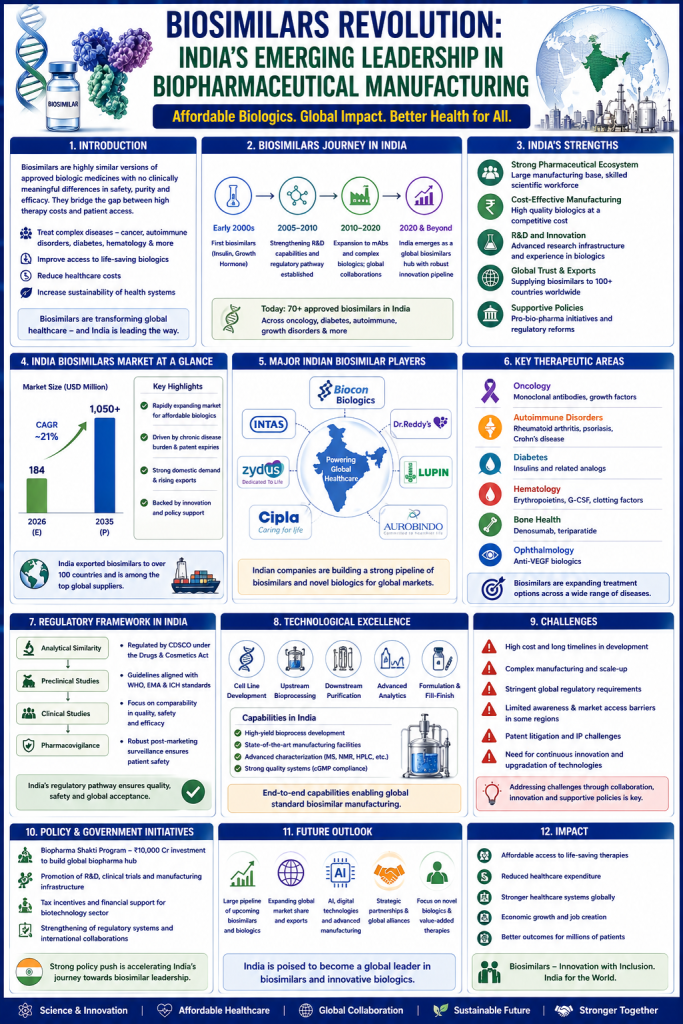
India’s biosimilars journey began in the early 2000s with the development of recombinant insulin and growth hormone biosimilars. Over time, the industry expanded to include monoclonal antibodies and complex biologic therapies.
Today, India has approved more than 70 biosimilar products, covering a wide range of therapeutic categories including oncology, diabetes, autoimmune diseases, and hematological disorders. (ResearchGate)
The Indian biosimilars industry has grown rapidly due to several factors:
- strong pharmaceutical manufacturing base
- skilled biotechnology workforce
- competitive production costs
- expanding biotechnology infrastructure
These factors have allowed Indian companies to compete effectively in global biosimilars markets.
3. Biosimilars and the Global Biopharmaceutical Market
Biologics represent one of the fastest-growing segments of the global pharmaceutical market. However, the high cost of biologic therapies presents major challenges for healthcare systems.
Biosimilars help address this challenge by offering similar therapeutic outcomes at lower cost. As biologic patents expire, the biosimilars market is expected to expand significantly.
India currently accounts for a growing share of the global biosimilars supply and has become a major exporter of biosimilar medicines. In 2025, India represented approximately 3.2% of the global biosimilars market in revenue terms, while contributing a significant share of global biosimilar supply. (BioSpectrum India)
The country’s biosimilars exports are projected to increase substantially in the coming years as more Indian manufacturers enter global markets.
4. India’s Biosimilars Market Growth
The biosimilars industry in India is experiencing rapid expansion due to increasing demand for affordable biologic therapies.
Recent analyses indicate that the Indian biosimilars market could grow from approximately USD 184 million in 2026 to over USD 1 billion by 2035, representing a compound annual growth rate of around 21%. (Research and Markets)
Other projections suggest even larger growth potential, with the Indian biosimilars market expected to exceed USD 4 billion by 2034. (IMARC Group)
Several factors are driving this growth:
- increasing prevalence of chronic diseases
- rising healthcare expenditures
- expiration of patents for major biologic drugs
- supportive regulatory frameworks
5. Major Indian Biosimilar Manufacturers
India’s biosimilars ecosystem includes several leading pharmaceutical and biotechnology companies.
Key players include:
- Biocon Biologics
- Intas Pharmaceuticals
- Zydus Lifesciences
- Dr. Reddy’s Laboratories
- Lupin
- Cipla
- Aurobindo Pharma
These companies are actively developing biosimilars for monoclonal antibodies, insulin analogs, and other biologic therapies.
Some Indian companies have achieved significant global recognition. For example, Biocon Biologics has emerged as one of the world’s leading biosimilars companies, generating over $1 billion in revenue and expanding its global market presence. (The Times of India)
6. Regulatory Framework for Biosimilars in India
India has developed a regulatory pathway for biosimilars under the supervision of the Central Drugs Standard Control Organization (CDSCO) and the Department of Biotechnology (DBT).
The regulatory framework emphasizes:
- comparative analytical characterization
- preclinical studies
- clinical trials demonstrating similarity
- pharmacovigilance monitoring
These regulatory requirements ensure that biosimilars meet strict safety, quality, and efficacy standards comparable to reference biologic drugs.
Over time, India’s biosimilar regulatory framework has evolved to align more closely with international standards established by the World Health Organization (WHO) and regulatory agencies such as the European Medicines Agency (EMA).
7. Technological Advances in Biosimilar Manufacturing
Developing biosimilars requires advanced biotechnology capabilities, including cell culture engineering, protein purification technologies, and analytical characterization techniques.
Modern biosimilar development involves several sophisticated technologies:
- recombinant DNA technology
- monoclonal antibody engineering
- advanced bioreactor systems
- protein structure characterization techniques
India’s biotechnology sector has made significant progress in these areas, enabling local manufacturers to produce complex biologics with high quality and consistency.
8. Opportunities for India in the Global Biosimilars Market
India possesses several strategic advantages that could support its leadership in global biosimilars manufacturing.
8.1 Cost-Efficient Manufacturing
Indian pharmaceutical manufacturers are able to produce biologic medicines at significantly lower costs compared with Western pharmaceutical companies.
8.2 Skilled Scientific Workforce
India has a large pool of trained scientists specializing in biotechnology, molecular biology, and pharmaceutical sciences.
8.3 Expanding Biotechnology Infrastructure
Government investments in biotechnology research institutions and industrial parks are strengthening India’s biopharmaceutical ecosystem.
8.4 Patent Expiries of Major Biologics
Many blockbuster biologic drugs will lose patent protection in the coming decade, creating substantial opportunities for biosimilar manufacturers.
9. Challenges Facing the Biosimilars Industry
Despite rapid progress, India’s biosimilars industry faces several challenges.
9.1 High Development Costs
Developing a biosimilar requires significant investment in biotechnology research and clinical trials.
9.2 Regulatory Barriers in International Markets
Access to regulated markets such as the United States and Europe requires compliance with stringent regulatory standards.
9.3 Manufacturing Complexity
Biologic manufacturing is significantly more complex than small-molecule drug production.
9.4 Intellectual Property Disputes
Patent litigation with originator biologic companies may delay biosimilar market entry.
10. Government Initiatives Supporting Biosimilar Development
Recognizing the strategic importance of biologics and biosimilars, the Government of India has introduced several initiatives to strengthen the biopharmaceutical sector.
Recent policy initiatives include the Biopharma Shakti program, which aims to transform India into a global biopharmaceutical manufacturing hub through investment in research, manufacturing infrastructure, and clinical trial networks. (The Economic Times)
These initiatives seek to promote innovation, strengthen domestic manufacturing capacity, and enhance India’s global competitiveness in biotechnology.
11. Future Outlook
The biosimilars revolution represents one of the most significant transformations in the pharmaceutical industry.
India’s role in this transformation is likely to expand in the coming decade due to:
- increasing global demand for affordable biologic therapies
- technological advances in biotechnology manufacturing
- supportive government policies
- expanding global partnerships
Experts believe that India will remain a key supplier of biosimilars globally while gradually expanding its capabilities in innovative biologics and advanced biopharmaceutical research. (The Times of India)
12. Conclusion
The rapid expansion of biosimilars represents a transformative shift in global pharmaceutical markets, enabling wider access to life-saving biologic therapies. India has emerged as a major participant in this revolution due to its strong pharmaceutical manufacturing capabilities, skilled workforce, and competitive production costs.
With continued investment in biotechnology infrastructure, regulatory reforms, and research innovation, India has the potential to become a global leader in biosimilar development and biopharmaceutical manufacturing.
The biosimilars revolution therefore represents not only an opportunity for industrial growth but also a pathway toward improving global access to advanced medical treatments.
References
- Meher B.R. Biosimilars in India: Current status and future perspectives. Journal of Pharmaceutical Sciences. (PMC)
- ResearchGate. Overview of the biosimilar market in India. (ResearchGate)
- LinkedIn Academic Review. Indian biosimilars development landscape. (LinkedIn)
- BioSpectrum India. India’s global biosimilars market share. (BioSpectrum India)
- Research and Markets. India biosimilars market forecast. (Research and Markets)
- IMARC Group. India biosimilars market size and projections. (IMARC Group)
- Cytiva Life Sciences. Global biosimilar development trends. (cytivalifesciences.com)