Digital Therapeutics: The Convergence of Software, Medicine, and Behavioral Pharmacology
Abstract
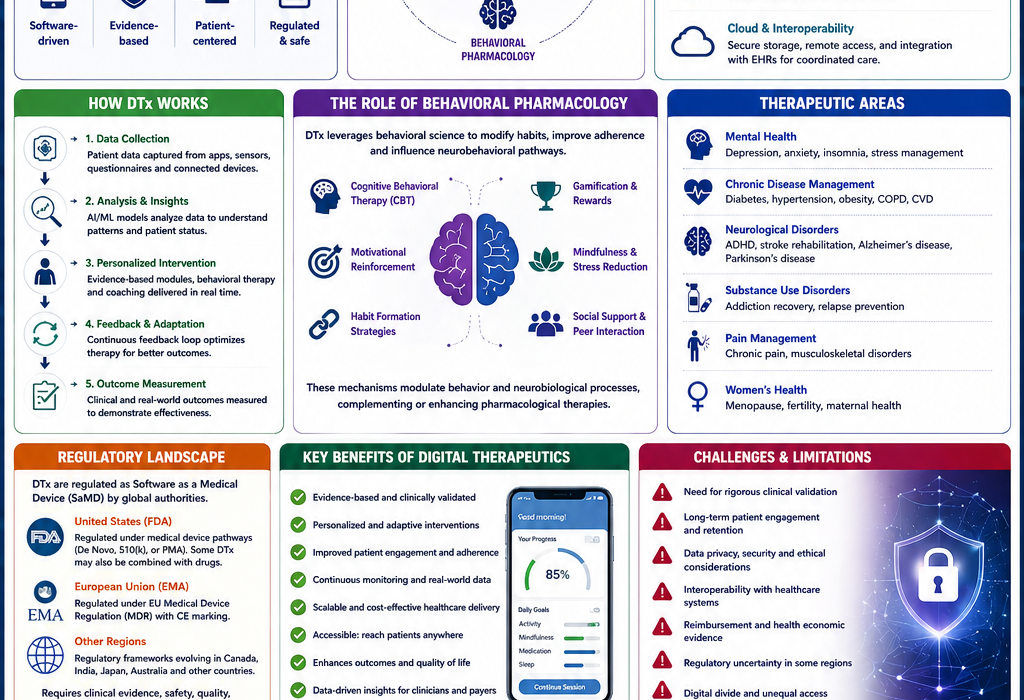
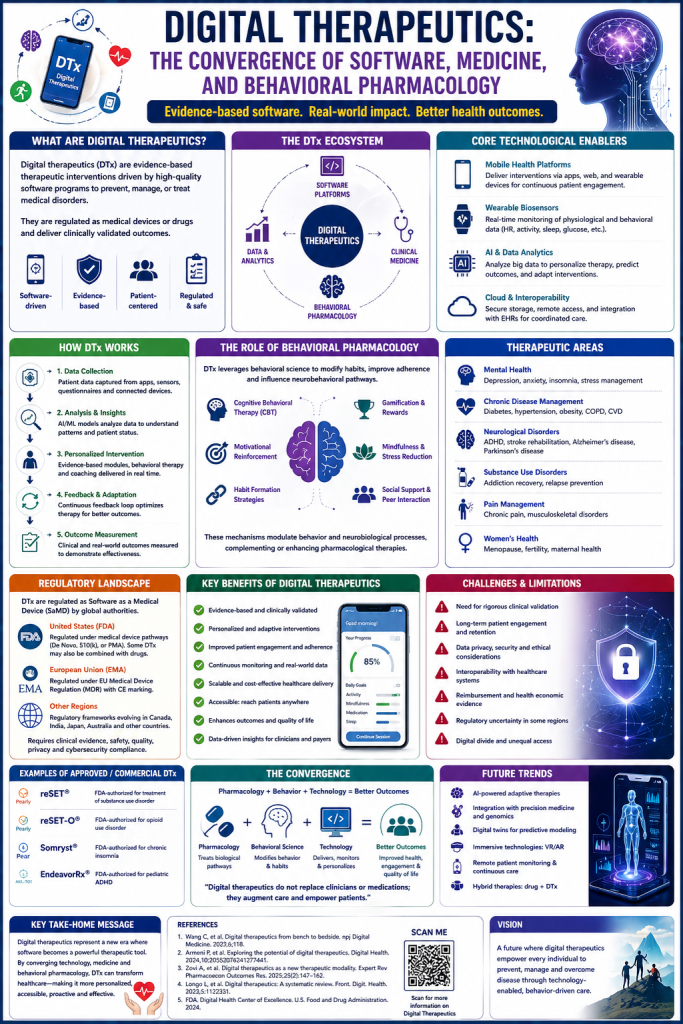
Digital therapeutics (DTx) represent a rapidly emerging category of medical interventions that utilize evidence-based software programs to prevent, manage, or treat diseases. These technologies operate at the intersection of software engineering, clinical medicine, and behavioral pharmacology, offering novel approaches to therapeutic intervention that extend beyond conventional pharmacological treatments. Advances in mobile health technologies, artificial intelligence, wearable sensors, and cloud computing have enabled the development of digital therapeutics capable of delivering personalized interventions in real time. Unlike general wellness applications, DTx products must undergo rigorous clinical validation to demonstrate safety and efficacy comparable to traditional medical therapies. These technologies frequently incorporate behavioral science principles, including cognitive behavioral therapy, motivational reinforcement, and adaptive feedback systems, to influence patient behavior and improve health outcomes. This review explores the conceptual foundations, technological infrastructure, clinical applications, regulatory frameworks, and ethical challenges associated with digital therapeutics. The convergence of software technologies with pharmacology and behavioral medicine represents a transformative shift in healthcare delivery, enabling more personalized, scalable, and data-driven therapeutic interventions. As digital therapeutics continue to evolve, they are likely to become an integral component of future healthcare systems and pharmaceutical innovation.
Keywords: Digital therapeutics, behavioral pharmacology, digital medicine, software as a medical device, precision medicine, mobile health
1. Introduction
The integration of digital technologies into healthcare has given rise to a new therapeutic paradigm known as digital therapeutics (DTx). These technologies represent a specialized subset of digital health solutions designed to deliver clinically validated therapeutic interventions through software platforms such as mobile applications, wearable devices, and virtual reality systems. (ScienceDirect)
Digital therapeutics differ from conventional health applications because they are developed as medical interventions supported by clinical evidence and often regulated by health authorities. Their primary purpose is to prevent, manage, or treat diseases through software-driven interventions that influence patient behavior, physiological monitoring, and treatment adherence. (ICT&health)
The emergence of digital therapeutics has been facilitated by advances in several technological domains, including smartphone computing, wearable biosensors, artificial intelligence, and cloud-based data analytics. These technologies enable continuous patient monitoring, personalized behavioral interventions, and remote healthcare delivery.
Furthermore, digital therapeutics have gained significant attention in recent years due to increasing healthcare costs, rising prevalence of chronic diseases, and the need for scalable healthcare solutions. Digital therapeutics offer the potential to complement or even replace certain pharmacological therapies by addressing behavioral and lifestyle determinants of disease.
This review explores the scientific foundations and clinical applications of digital therapeutics, emphasizing their role at the intersection of software engineering, medicine, and behavioral pharmacology.
2. Concept and Definition of Digital Therapeutics
Digital therapeutics are defined as evidence-based therapeutic interventions delivered through software programs to prevent, manage, or treat medical disorders. (ScienceDirect)
These interventions are typically delivered through digital platforms such as:
- smartphone applications
- wearable devices
- web-based programs
- virtual reality environments
- connected medical devices
Unlike general digital health applications designed primarily for wellness tracking, digital therapeutics must demonstrate clinical efficacy through controlled clinical trials before they are deployed in clinical practice.
Digital therapeutics may function in several ways:
- Standalone therapeutic interventions
- Adjunct therapies combined with pharmaceuticals
- Digital companions supporting medication adherence
The integration of digital therapeutics with traditional pharmacological treatments has given rise to hybrid therapeutic strategies known as digital medicine, which combine pharmacotherapy with digital monitoring technologies.
3. Technological Foundations of Digital Therapeutics
The development of digital therapeutics relies on several core technological components that enable personalized and data-driven therapeutic interventions.
3.1 Mobile Health Platforms
Smartphones serve as the primary delivery platform for many digital therapeutic interventions. Mobile applications can deliver structured therapeutic programs, monitor patient behavior, and provide personalized feedback.
These applications often incorporate interactive features such as reminders, behavioral exercises, and real-time health monitoring.
3.2 Wearable Biosensors
Wearable devices enable continuous monitoring of physiological parameters such as heart rate, physical activity, sleep patterns, and glucose levels. These data streams allow digital therapeutics to adapt interventions according to individual patient responses.
3.3 Artificial Intelligence and Data Analytics
Artificial intelligence algorithms play a crucial role in analyzing large volumes of health data generated by digital therapeutic platforms. Machine learning models can identify patterns in patient behavior and physiological responses, enabling personalized therapeutic recommendations.
3.4 Cloud Computing Infrastructure
Cloud-based systems provide the computational infrastructure necessary for storing and processing large healthcare datasets. These systems facilitate remote patient monitoring and enable healthcare providers to access patient data in real time.
4. Behavioral Pharmacology and Digital Therapeutics
Behavioral pharmacology examines how drugs influence behavior and how behavioral factors influence pharmacological responses. Digital therapeutics incorporate behavioral science principles to modify patient behavior and improve therapeutic outcomes.
Many digital therapeutics employ behavioral intervention frameworks such as:
- cognitive behavioral therapy
- motivational reinforcement strategies
- habit-formation models
- gamification techniques
For example, digital therapeutic programs designed for mental health disorders frequently incorporate structured cognitive behavioral therapy modules delivered through smartphone applications.
These behavioral interventions aim to influence neural and psychological processes involved in addiction, anxiety, depression, and chronic disease management.
By targeting behavioral determinants of disease, digital therapeutics may enhance the effectiveness of pharmacological treatments and improve patient adherence.
5. Clinical Applications of Digital Therapeutics
Digital therapeutics are currently being developed for a wide range of medical conditions, particularly chronic diseases and mental health disorders.
5.1 Mental Health Disorders
Digital therapeutics have shown significant promise in treating mental health conditions such as depression, anxiety, and insomnia. Mobile-based therapeutic interventions frequently incorporate cognitive behavioral therapy modules and behavioral monitoring systems.
Recent regulatory approvals include digital therapeutic applications designed to treat major depressive disorder using structured behavioral therapy exercises delivered through smartphone platforms. (Wikipedia)
5.2 Chronic Disease Management
Digital therapeutics are increasingly used for managing chronic diseases such as diabetes, hypertension, obesity, and cardiovascular disease. These programs often combine behavioral coaching, remote monitoring, and personalized feedback to support lifestyle modification.
5.3 Neurological Disorders
Emerging digital therapeutics are being developed for neurological disorders such as Alzheimer’s disease, ADHD, and stroke rehabilitation.
5.4 Addiction and Substance Use Disorders
Digital behavioral interventions have demonstrated potential for treating substance use disorders by providing continuous behavioral support and relapse prevention strategies.
6. Regulatory Frameworks for Digital Therapeutics
Because digital therapeutics function as medical interventions, regulatory authorities increasingly treat them as software as a medical device (SaMD).
In the United States, many digital therapeutics are regulated by the FDA under medical device pathways. These products must demonstrate clinical effectiveness and safety before they are approved for medical use. (Wikipedia)
Similarly, the European Union regulates digital therapeutics under the Medical Device Regulation (EU MDR), which requires compliance with strict safety, performance, and data protection standards.
Regulatory oversight ensures that digital therapeutics meet the same standards of scientific validation and quality control required for conventional medical therapies.
7. Challenges and Limitations
Despite their potential, digital therapeutics face several challenges that may hinder widespread adoption.
7.1 Clinical Evidence and Validation
Robust clinical trials are required to demonstrate the effectiveness of digital therapeutics. However, designing and conducting such trials can be complex due to rapidly evolving software technologies.
7.2 Patient Engagement and Adherence
Sustained user engagement represents one of the most significant challenges for digital therapeutic interventions. Long-term adherence to digital treatment programs can decline over time.
7.3 Data Privacy and Security
Digital therapeutics collect large amounts of sensitive health data. Ensuring data privacy and cybersecurity is therefore critical for maintaining patient trust and regulatory compliance.
7.4 Regulatory and Reimbursement Challenges
Many healthcare systems still lack clear reimbursement frameworks for digital therapeutics, which may limit their adoption in clinical practice.
8. Future Perspectives
The future of digital therapeutics is closely linked to advances in digital medicine, artificial intelligence, and personalized healthcare.
Several emerging trends are likely to shape the future of digital therapeutics:
- integration with precision medicine and pharmacogenomics
- AI-driven adaptive treatment algorithms
- integration with wearable biosensors and remote monitoring systems
- digital twins and predictive health modeling
- hybrid therapies combining drugs with digital behavioral interventions
As these technologies mature, digital therapeutics may become a core component of personalized healthcare systems, complementing traditional pharmacological treatments.
9. Conclusion
Digital therapeutics represent a transformative innovation in modern healthcare, bridging the gap between software technologies, clinical medicine, and behavioral pharmacology. By delivering evidence-based therapeutic interventions through digital platforms, these technologies enable scalable and personalized treatment strategies for a wide range of medical conditions.
Although challenges remain in terms of regulatory frameworks, clinical validation, and patient engagement, continued advances in digital health technologies are likely to accelerate the adoption of digital therapeutics in clinical practice.
The convergence of software, medicine, and behavioral science has the potential to redefine therapeutic paradigms and improve healthcare delivery in the twenty-first century.
References
- Wang C., et al. (2023). Digital therapeutics from bench to bedside. npj Digital Medicine. (Nature)
- Armeni P., et al. (2024). Exploring the potential of digital therapeutics. Digital Health. (Sage Journals)
- Zovi A., et al. (2025). Digital therapeutics as a new therapeutic modality. Expert Review of Pharmacoeconomics & Outcomes Research. (Taylor & Francis Online)
- Digital therapeutics overview. ScienceDirect Topics. (ScienceDirect)
- Kwon H. (2024). Digital mental health applications and therapeutic interventions. (PMC)
- Digital therapeutics definition and regulation. (Wikipedia)
- Digital health interventions in healthcare systems. (Wikipedia)