The Future of Regulatory Science: Adaptive Approval Pathways for Emerging Therapies
Abstract
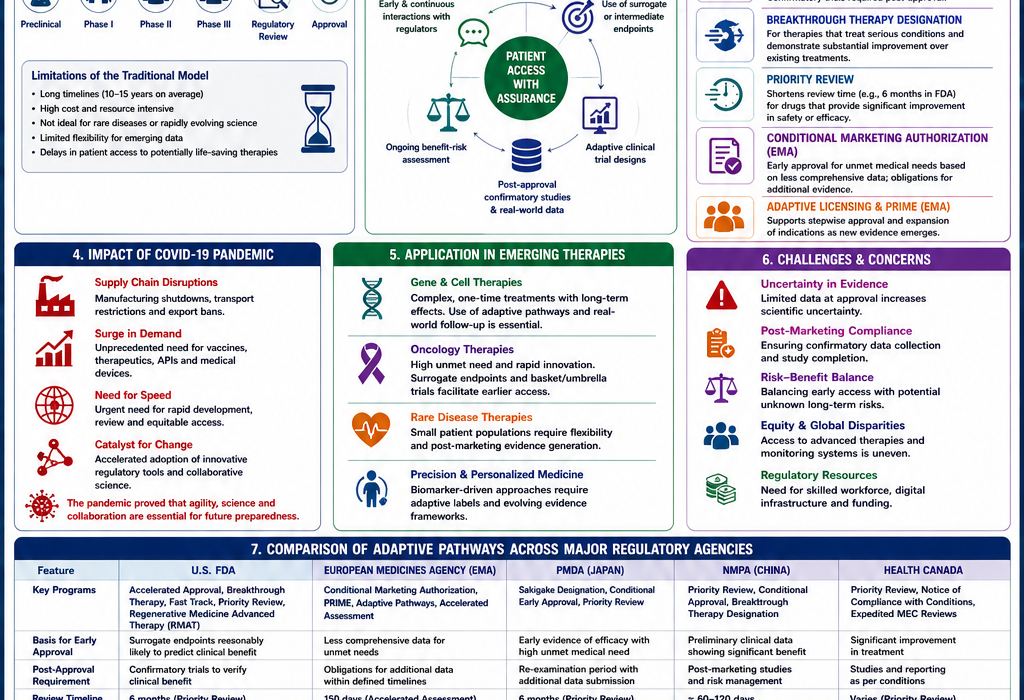
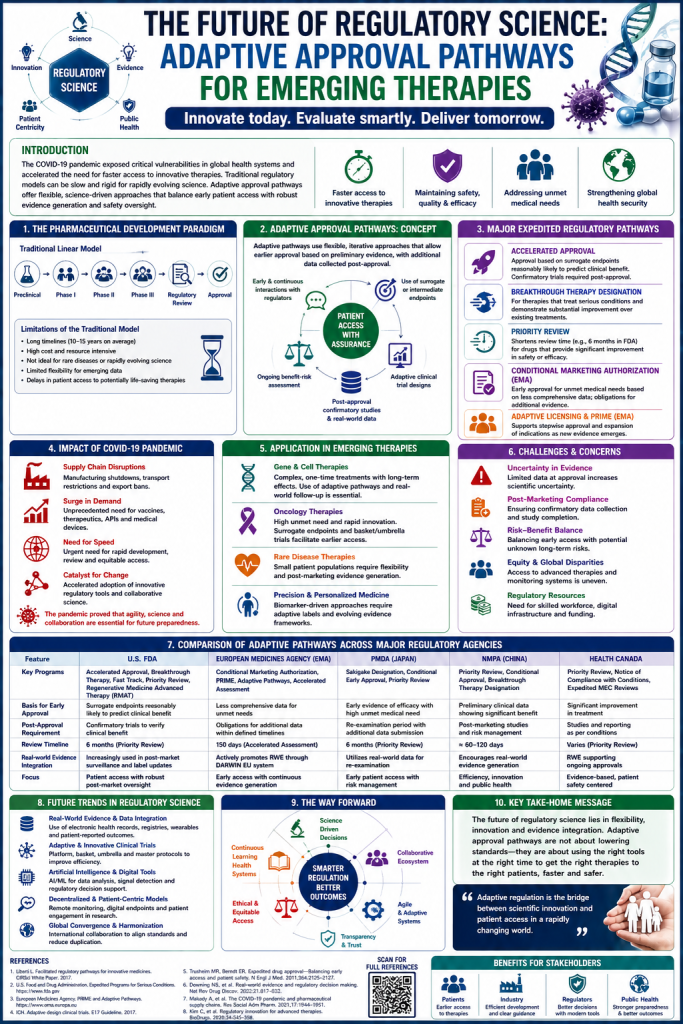
Rapid advances in biotechnology, genomics, and precision medicine have transformed the pharmaceutical innovation landscape, creating unprecedented opportunities for developing novel therapies such as gene therapies, cell-based treatments, RNA therapeutics, and personalized medicines. However, these scientific breakthroughs challenge traditional drug regulatory frameworks that were designed for conventional small-molecule pharmaceuticals. In response, regulatory authorities worldwide have begun implementing adaptive approval pathways that accelerate patient access to innovative therapies while maintaining rigorous safety and efficacy standards. These regulatory innovations—including accelerated approval, conditional marketing authorization, breakthrough therapy designation, and adaptive licensing—represent a shift toward more flexible, science-driven regulatory systems. This review examines the evolving field of regulatory science and the emergence of adaptive approval pathways for innovative therapies. The article explores the scientific and policy foundations of expedited regulatory mechanisms, compares regulatory frameworks across major agencies, and discusses the challenges associated with accelerated approval models. Finally, the review analyzes future trends in regulatory science, including real-world evidence integration, adaptive clinical trial designs, and global regulatory harmonization. The evolution of regulatory science will play a critical role in ensuring that emerging biomedical innovations reach patients efficiently while safeguarding public health.
Keywords: Regulatory science, adaptive approval pathways, accelerated approval, regulatory innovation, clinical trials, pharmaceutical regulation
1. Introduction
Regulatory science plays a central role in ensuring that medicines entering the market meet rigorous standards of safety, efficacy, and quality. Traditionally, drug approval has followed a linear and highly structured pathway involving preclinical studies, three phases of clinical trials, and comprehensive regulatory evaluation. While this approach has historically safeguarded public health, it can also delay patient access to innovative therapies.
In recent decades, biomedical innovation has accelerated dramatically. Advances in molecular biology, genomics, and biotechnology have led to the development of highly complex therapeutic modalities such as gene therapies, CAR-T cell therapies, and personalized medicines. These therapies often target rare or life-threatening diseases for which conventional treatment options are limited.
Consequently, regulatory authorities have begun adopting more flexible regulatory frameworks designed to facilitate faster access to promising therapies without compromising scientific rigor. These frameworks are commonly referred to as adaptive approval pathways or expedited regulatory programs.
Major regulatory agencies—including the United States Food and Drug Administration (FDA), the European Medicines Agency (EMA), and other global regulators—have introduced multiple programs to accelerate the evaluation and approval of innovative medicines. (ijdra.com)
This review examines the evolution of regulatory science and the emergence of adaptive approval pathways designed to address the challenges posed by emerging biomedical innovations.
2. Evolution of Regulatory Science in Drug Development
Regulatory science refers to the scientific discipline that develops new tools, standards, and methodologies for evaluating the safety, efficacy, and quality of medical products.
Historically, regulatory systems were designed primarily for conventional pharmaceuticals, particularly small-molecule drugs developed through relatively predictable chemical synthesis and clinical testing processes. However, modern biomedical innovation has significantly increased the complexity of therapeutic products.
Emerging therapies—including biologics, gene therapies, and personalized treatments—often involve complex mechanisms of action and require novel clinical trial designs and regulatory evaluation frameworks.
As a result, regulatory agencies have increasingly adopted innovative regulatory approaches that emphasize:
- risk-based regulatory decision-making
- adaptive clinical trial designs
- early collaboration between regulators and developers
- integration of real-world data and evidence
These changes reflect a broader transformation in regulatory science toward more flexible and responsive regulatory systems.
3. Adaptive Approval Pathways: Concept and Rationale
Adaptive approval pathways are regulatory mechanisms designed to accelerate the availability of promising therapies, particularly for serious or life-threatening conditions where existing treatment options are limited.
Unlike traditional regulatory approval processes that require extensive clinical evidence before market authorization, adaptive approval frameworks allow earlier access to therapies based on preliminary evidence, with additional data collected after approval.
This regulatory strategy seeks to balance two competing priorities:
- Ensuring patient access to potentially life-saving therapies
- Maintaining rigorous evaluation of safety and efficacy
Adaptive approval pathways typically involve conditional approval mechanisms, post-marketing surveillance, and confirmatory clinical trials.
These pathways are particularly relevant for therapies targeting rare diseases, oncology, and advanced biologics, where traditional large-scale clinical trials may be difficult to conduct.
4. Major Expedited Regulatory Pathways
Several expedited regulatory programs have been introduced by major regulatory agencies to facilitate faster approval of innovative therapies.
4.1 Accelerated Approval
Accelerated approval allows drugs for serious conditions to be approved based on surrogate endpoints that are reasonably likely to predict clinical benefit. This approach significantly reduces the time required for clinical trials by allowing earlier evaluation of therapeutic effects. (U.S. Food and Drug Administration)
However, drugs approved through this pathway must undergo post-approval confirmatory trials to verify clinical benefits.
4.2 Fast Track and Breakthrough Therapy Designation
Programs such as Fast Track and Breakthrough Therapy designation aim to expedite the development and review of drugs that address unmet medical needs.
These programs facilitate closer collaboration between regulatory authorities and drug developers, enabling earlier identification of scientific and regulatory challenges.
4.3 Priority Review
Priority review programs shorten regulatory review timelines for drugs that demonstrate significant improvements over existing therapies.
For example, the review period for certain medicines may be reduced from approximately ten months to six months under priority review programs. (NCBI)
4.4 Conditional Marketing Authorization
In Europe, conditional marketing authorization allows early approval of medicines addressing unmet medical needs based on less comprehensive clinical data.
Sponsors must provide additional evidence after approval to confirm the therapy’s benefit-risk profile.
4.5 Adaptive Licensing and PRIME
The EMA’s Priority Medicines (PRIME) initiative supports the development of therapies that may offer major therapeutic advantages.
Adaptive licensing strategies allow gradual expansion of therapeutic indications as additional evidence becomes available.
5. Application of Adaptive Pathways to Emerging Therapies
Adaptive regulatory pathways are particularly important for emerging therapeutic technologies.
5.1 Gene and Cell Therapies
Advanced therapies such as gene editing and CAR-T cell treatments present unique regulatory challenges due to their complexity and potential long-term biological effects.
Regulatory agencies have introduced specialized frameworks for evaluating these therapies, including regenerative medicine designations and advanced therapy medicinal product classifications. (Cromos Pharma |)
5.2 Rare Disease Therapies
For rare diseases, traditional large-scale clinical trials may not be feasible due to limited patient populations.
Adaptive regulatory frameworks allow regulators to evaluate these therapies using smaller clinical trials combined with post-market evidence collection.
5.3 Precision and Personalized Medicine
Precision medicine approaches require regulatory systems capable of evaluating therapies tailored to individual genetic profiles.
Adaptive regulatory science allows regulators to incorporate genomic data and biomarker evidence into drug approval decisions.
6. Challenges and Controversies
While adaptive approval pathways offer significant benefits, they also raise several scientific and regulatory concerns.
6.1 Uncertainty in Clinical Evidence
Early approval based on surrogate endpoints or limited data may increase uncertainty regarding long-term safety and effectiveness.
Some drugs approved through accelerated pathways have later been withdrawn when confirmatory trials failed to demonstrate clinical benefit. (ScienceDirect)
6.2 Post-Marketing Compliance
Ensuring that pharmaceutical companies complete required confirmatory trials after approval remains a major regulatory challenge.
Failure to complete these studies may undermine the scientific basis of accelerated approval systems.
6.3 Ethical Considerations
Regulators must carefully balance the need for rapid patient access to innovative therapies with the responsibility to ensure patient safety.
Inadequate evidence at the time of approval may expose patients to unforeseen risks.
7. Emerging Trends in Regulatory Science
The future of regulatory science is likely to involve several transformative developments.
7.1 Real-World Evidence
Regulators are increasingly using real-world evidence derived from healthcare databases, patient registries, and digital health technologies to supplement clinical trial data.
7.2 Adaptive Clinical Trial Designs
Innovative trial designs—including basket trials, umbrella trials, and platform trials—allow more efficient evaluation of multiple therapies or patient populations within a single clinical study.
7.3 Artificial Intelligence in Regulatory Review
AI-driven analytical tools may enhance regulatory decision-making by analyzing large biomedical datasets and predicting drug safety signals.
7.4 Global Regulatory Harmonization
International collaboration among regulatory agencies may help standardize approval pathways and reduce duplication of regulatory evaluations across jurisdictions.
8. Conclusion
The rapid evolution of biomedical innovation has necessitated significant transformation in regulatory science. Adaptive approval pathways have emerged as critical regulatory tools for accelerating access to innovative therapies while maintaining rigorous safety and efficacy standards.
Programs such as accelerated approval, conditional marketing authorization, and breakthrough therapy designation demonstrate how regulatory systems are evolving to address the challenges posed by emerging therapies.
However, adaptive approval frameworks must be carefully implemented to ensure that early access to medicines does not compromise patient safety. Strengthening post-marketing surveillance, improving transparency in regulatory decisions, and integrating real-world evidence into regulatory evaluation will be essential for the future of regulatory science.
Ultimately, adaptive regulatory systems will play a pivotal role in enabling the safe and efficient translation of biomedical innovation into clinical practice.
References
- Liberti L. (2017). Facilitated regulatory pathways for innovative medicines. Centre for Innovation in Regulatory Science. (cirsci.org)
- Mane A., Nagrale S. (2026). Global regulatory frameworks for drug approval: A comparative review of USFDA, EMA, and CDSCO. International Journal of Drug Regulatory Affairs. (ijdra.com)
- Chaugule P.D., Varpe P.C., et al. (2025). Expedited pathway insights in oncology drug approvals. Critical Reviews in Oncology. (ScienceDirect)
- U.S. Food and Drug Administration. Accelerated Approval Program. (U.S. Food and Drug Administration)
- Shore C.K. (2024). FDA and EMA collaboration in regulatory science. (NCBI)
- Accelerated pathways for authorization of medicines in Europe and the United States. BioProcess International. (BioProcess International)
- Accelerated approval pathway (FDA). (Wikipedia)