Indian Diabetic Market Size Analysis Report (2026)
A Comprehensive Strategic Assessment of India’s Diabetes Economy
By Author Devanssh Mehta
Executive Summary
India has transitioned from being described merely as the “diabetes capital of the world” to becoming one of the largest diabetes healthcare economies globally. Diabetes in India is no longer only a chronic disease burden—it is now a multidimensional economic ecosystem involving pharmaceuticals, insulin, diagnostics, devices, preventive healthcare, insurance, digital therapeutics, nutrition, and long-term chronic care. (EUCLID School of Global Health)
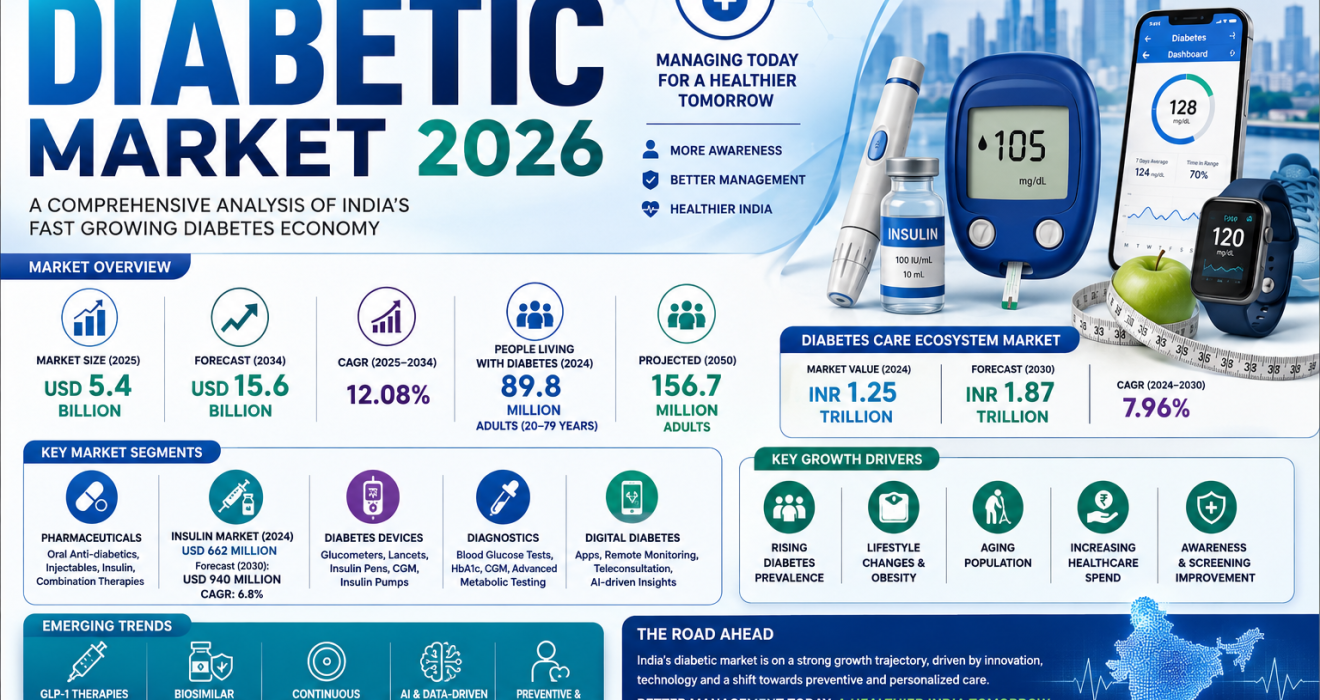
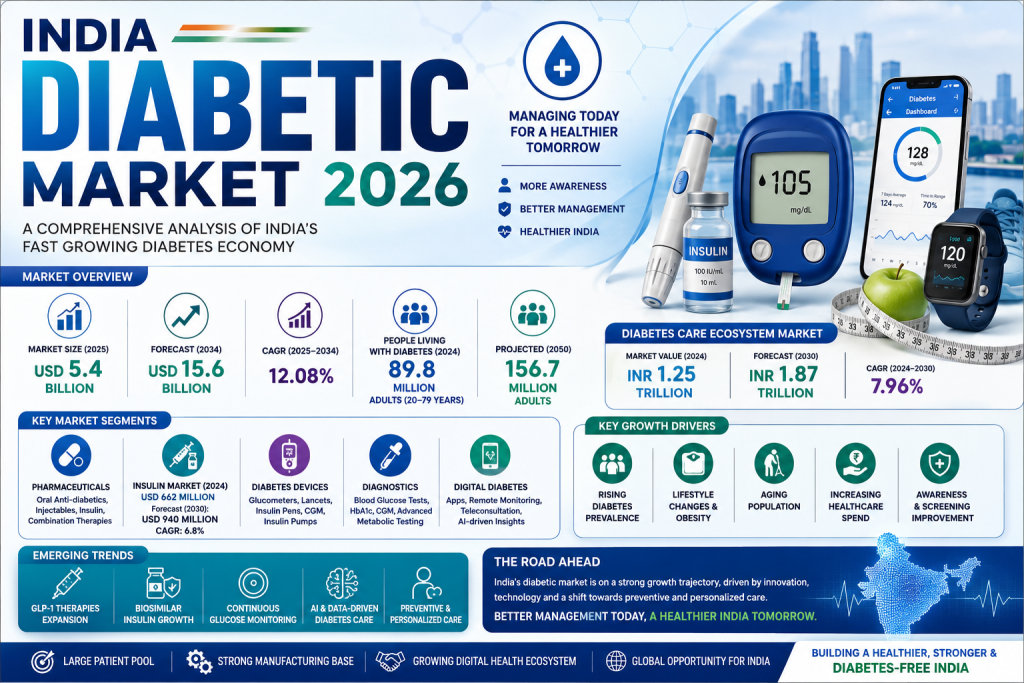
Recent industry estimates suggest the Indian diabetes market reached approximately USD 5.4 billion in 2025 and may expand to nearly USD 15.6 billion by 2034 at a CAGR of approximately 12.08%. (MarketResearch.com)
At the broader diabetes-care ecosystem level (including devices, diagnostics, services, monitoring, and treatment), the market was estimated at approximately INR 1.25 trillion in 2024 and is projected to reach INR 1.87 trillion by 2030. (Business Wire)
India is estimated to have approximately 89.8 million adults (20–79 years) living with diabetes in 2024, with projections indicating continued expansion toward 156.7 million by 2050 if current trajectories persist. (IMARC Group)
This report presents a detailed strategic analysis of:
- Market size and valuation
- Disease burden and epidemiology
- Pharmaceutical opportunities
- Device and digital market evolution
- Competitive ecosystem
- SWOT and PESTLE analysis
- Future investment outlook
1. Introduction: Diabetes Has Become an Economic Sector
Historically, India’s healthcare growth was driven by infectious diseases and acute care.
Today, chronic diseases dominate.
Among them, diabetes occupies a unique position because:
- treatment is lifelong,
- diagnosis is expanding,
- monitoring is recurring,
- complications create secondary markets.
The diabetic market today includes:
Prevention
↓
Diagnostics
↓
Drug therapy
↓
Insulin
↓
Monitoring devices
↓
Hospital services
↓
Digital monitoring
↓
Complication management
This creates a continuous economic cycle.
2. Market Size of Diabetes Industry in India
Because different analysts define the market differently, multiple estimates coexist.
A. Overall Diabetes Market
| Metric | Value |
|---|---|
| Market Size (2025) | USD 5.4 Billion |
| Forecast (2034) | USD 15.6 Billion |
| CAGR | 12.08% |
B. Diabetes Care Ecosystem
| Metric | Value |
|---|---|
| Market Value (2024) | INR 1.25 Trillion |
| Forecast (2030) | INR 1.87 Trillion |
| CAGR | 7.96% |
C. Diabetes Drugs Segment
| Metric | Estimate |
|---|---|
| Market (2025) | USD 1.76 Billion |
| Forecast (2031) | USD 2.16 Billion |
3. Epidemiological Foundation of Growth
The diabetic market exists because of unprecedented disease expansion.
Major growth drivers include:
Demographic
- Aging population
- Increased longevity
Lifestyle
- Sedentary work
- Reduced activity
- Calorie excess
Metabolic
- Obesity
- Insulin resistance
Environmental
- Urbanization
- Stress
India crossed approximately 100 million diagnosed diabetes cases in recent estimates, making it among the largest diabetes populations globally. (Yahoo Finance)
4. Disease Segmentation and Commercial Structure
Type 1 Diabetes
Smaller volume.
High dependence on:
- insulin
- CGM
- specialty care
Type 2 Diabetes
Largest market segment.
Industry estimates suggest Type-2 contributes approximately 78% market share in India. (The Report Cube)
Drivers:
- obesity
- genetics
- urban lifestyle
Gestational Diabetes
Rapidly emerging category.
Important growth area because of:
- maternal screening
- preventive interventions
5. Pharmaceutical Market Analysis
Indian diabetes pharmacotherapy has evolved through four generations.
Generation 1
Metformin
Generation 2
Sulfonylureas
Generation 3
DPP-4 inhibitors
Generation 4
SGLT-2 and GLP-1
Current growth increasingly comes from premium and combination therapies. Recent pharmaceutical tracking indicates accelerated adoption of newer drug classes including GLP-1 therapies. (The Times of India)
6. Insulin Market Analysis
Insulin remains the backbone of advanced diabetes care.
India insulin market:
| Metric | Value |
|---|---|
| Revenue (2024) | USD 662 Million |
| Forecast (2030) | USD 940 Million |
| CAGR | 6.8% |
Major trends:
- biosimilar insulin
- analog adoption
- affordability programs
Insulin analog currently contributes the largest revenue share. (Grand View Research)
7. Diabetes Device Economy
Devices increasingly determine patient engagement.
Major categories:
- glucometers
- lancets
- insulin pens
- CGM
- pumps
India’s lancets market alone expanded to approximately USD 135.8 million in 2025 with long-term double-digit growth expectations. (Towards Healthcare)
Device expansion is driven by:
- self-monitoring
- home care
- telemedicine
8. Rise of Digital Diabetes
Digital diabetes management is becoming an independent business segment.
Growth pillars:
Remote Monitoring
Mobile Apps
AI-Assisted Management
Tele-Endocrinology
Digitalization improves:
- adherence
- follow-up
- early intervention
9. Diagnostic Market Transformation
Testing demand now extends beyond fasting glucose.
Growth areas:
- HbA1c
- CGM
- molecular risk profiling
- metabolic assessment
Diagnostics increasingly function as recurring revenue channels.
10. Retail Pharmacy and Distribution Dynamics
Distribution channels:
Retail Pharmacies
Largest channel.
Retail contributes approximately 57% of diabetes market distribution value. (IMARC Group)
Hospitals
Growth driver:
- complex diabetes
E-pharmacy
Emerging channel.
Drivers:
- convenience
- subscription models
11. Competitive Landscape
Market participants broadly include:
Global Leaders
- insulin innovators
- device companies
Indian Companies
- generics
- biosimilars
- chronic therapy portfolios
Strategic competition increasingly focuses on:
- affordability
- adherence
- combination therapy
12. Emerging GLP-1 Economy
One of the most important developments in India.
Premium diabetes therapies have begun reshaping market economics.
Recent market commentary indicates rapid expansion in GLP-1 use while remaining a smaller proportion of total diabetes volume. (The Times of India)
Recent launches and upcoming generic competition are expected to intensify the segment. (Reuters)
13. Healthcare Infrastructure Impact
Diabetes expansion is influencing:
- clinics
- diagnostics
- hospital OPDs
- specialist demand
Challenges remain:
- late diagnosis
- inconsistent follow-up
- rural access gaps
14. Economics of Diabetes
Direct costs:
- medicines
- devices
- diagnostics
Indirect costs:
- lost productivity
- absenteeism
- complications
Macro-economic consequences include:
- workforce reduction
- insurance burden
- chronic healthcare inflation
15. Investment Landscape
Highest Opportunity Areas:
★★★★★ Digital Diabetes
★★★★★ Devices & CGM
★★★★★ Biosimilar Insulin
★★★★★ Diabetes Diagnostics
★★★★ Chronic Care Platforms
★★★★ Preventive Nutrition
16. SWOT Analysis
Strengths
- Massive patient base
- Strong pharmaceutical manufacturing
- Growing diagnostics
Weaknesses
- High out-of-pocket spending
- Rural access limitations
Opportunities
- AI healthcare
- Precision diabetes
- Export markets
Threats
- Rising obesity
- premium treatment affordability
- counterfeit medicine risks
Authorities have recently acted against suspected counterfeit diabetes products, highlighting supply-chain vigilance needs. (Reuters)
17. PESTLE Analysis
Political
Expansion of healthcare programs.
Economic
Growing healthcare spending.
Social
Urban lifestyle changes.
Technological
Digital monitoring.
Legal
Regulatory strengthening.
Environmental
Lifestyle and pollution interaction.
18. Future Outlook to 2035
The Indian diabetic market will likely move through three major transitions:
Phase I
Drug expansion
Phase II
Digital diabetes ecosystems
Phase III
Predictive and precision diabetes
Expected dominant growth engines:
- GLP-1 therapies
- biosimilar insulin
- home monitoring
- AI-enabled chronic care
- preventive diagnostics
Long-term forecasts across major market models consistently indicate sustained expansion through 2034–2035. (Market Research Future)
Conclusion
India’s diabetic market is no longer simply a pharmaceutical category.
It has evolved into a full chronic disease economy integrating treatment, diagnostics, devices, technology, insurance, and behavioral healthcare.
The next decade will determine whether India remains primarily a large consumer market—or becomes a global leader in affordable diabetes innovation.
The winners of India’s diabetic economy will not merely manufacture medicines.
They will create integrated ecosystems that prevent disease, improve adherence, reduce complications, and make long-term care economically sustainable.